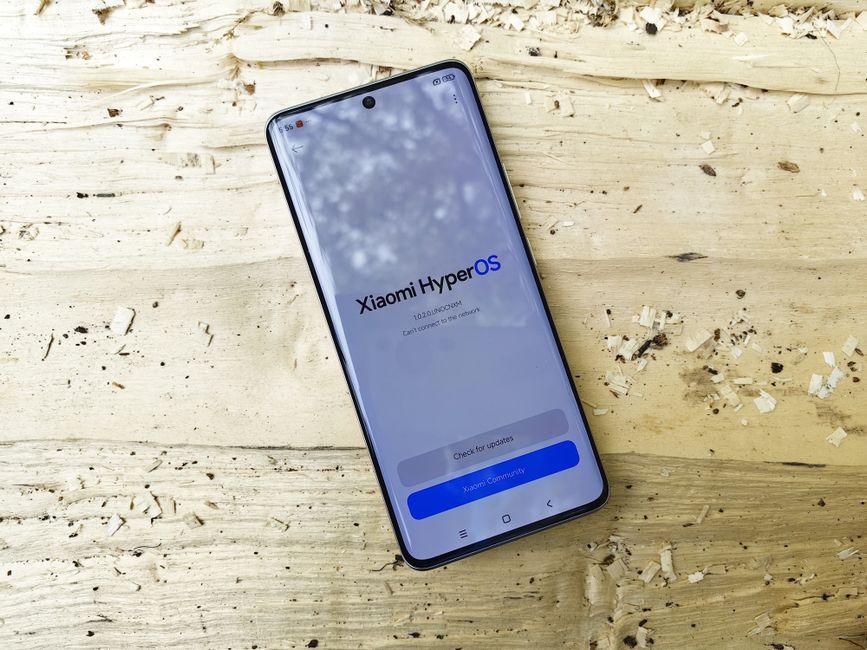
Arm's latest graphics architecture has arrived in consumer hands, and it did so quietly — tucked inside a foldable phone most of the world cannot yet buy. The Verge reports that the Xiaomi 15 Ultra successor, the Xiaomi 18 Fold, has launched in mainland China carrying Xiaomi's custom Xring O3 chip, which contains an Arm Mali G2-Ultra NX graphics processor that has been five years in the making.
To understand why a graphics chip inside a Chinese foldable phone deserves wider attention, it helps to understand how mobile graphics have worked for the better part of a decade. The dominant architecture shaping what games look and feel like on a smartphone has changed remarkably little in that time. Arm's Mali line has powered the GPU inside countless Android devices, but it has long operated under a structural constraint: mobile chips must balance heat, battery consumption, and physical size in ways that desktop or console graphics cards simply do not. The result has been a steady but unspectacular crawl in visual capability, with mobile games routinely looking and behaving like a generation behind their console counterparts even as raw processing benchmarks have climbed impressively.
The significance of the G2-Ultra NX, if Arm's development timeline is any guide, is that it likely represents a more fundamental rethinking of that architecture rather than an incremental revision. Five years of development is a long cycle even by the standards of semiconductor design, where major architectural generations typically run two to three years. That suggests Arm was not simply adding shader cores or tweaking clock speeds but reconsidering deeper assumptions about how a mobile GPU should handle workloads — possibly including ray tracing, mesh shading, or the kind of hardware acceleration for AI-driven upscaling that has transformed PC gaming through technologies like Nvidia's DLSS. None of that is confirmed from what The Verge has reported, but the timeline and the framing strongly suggest something more ambitious than a routine update.
The China-first launch is itself a detail worth sitting with. Xiaomi's decision to build its own chip, the Xring O3, rather than rely solely on Qualcomm's Snapdragon or MediaTek's Dimensity platforms follows a path that Huawei tried to walk before US export restrictions severely complicated its ambitions. For Xiaomi, vertical integration in silicon gives it more control over performance tuning, thermal management, and the differentiation story it can tell to Chinese consumers who are buying premium foldables in a fiercely competitive market. Pairing that custom chip with what appears to be Arm's most advanced mobile graphics architecture is a signal that Xiaomi intends to compete on capability, not just on form factor or price.
For Arm itself, the arrangement is a logical way to bring a new architecture to market. China remains one of the largest smartphone markets in the world, and a high-profile launch with a brand like Xiaomi generates real-world data and developer attention before a broader rollout. It also reinforces Arm's centrality to the Android ecosystem at a moment when the company has faced questions about its long-term position — Qualcomm has been developing its own GPU designs, and Apple's departure from Imagination Technologies years ago to build its own graphics pipeline demonstrated that large enough players can go their own way.
The consequences for developers and players will take time to materialize, and that lag is important to understand. Even if the G2-Ultra NX represents a genuine generational leap, game studios do not redesign their rendering pipelines for a single device or even a single chip family. The likely path is the one that has played out every time a new mobile graphics capability has arrived: a small number of showcase titles appear first, platform holders like Google and game engine makers like Unity and Unreal update their tooling to make the new features accessible, and then, over the course of two to three hardware generations, the capability becomes standard enough that developers can target it without excluding the majority of their audience. That process rewards patience, not excitement at launch day.
The readers and players most directly affected in the near term are those buying premium Android hardware in China. Everyone else is watching a preview of what will likely arrive in flagship global devices over the next year or two, once Qualcomm, MediaTek, and other Arm licensees incorporate comparable designs into their own chips.
What to watch for is straightforward. First, whether Arm formally announces the G2-Ultra NX architecture for broader licensing and what technical specifications accompany that announcement. Second, how quickly other chip designers follow Xiaomi's lead in adopting it, which will indicate whether this is a genuine step change or something more incremental dressed up in marketing. And third, whether game developers — particularly the studios building the titles that define what mobile gaming can aspire to — begin signaling support in their roadmaps. That last signal will matter most of all.