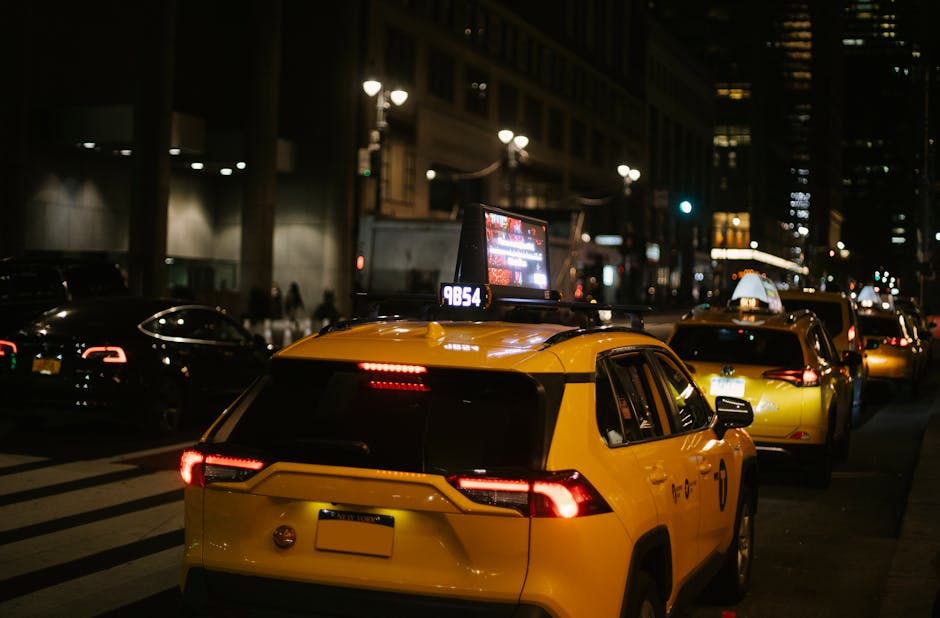
Tesla has announced it will begin selling its Cybercab autonomous vehicle to customers before the end of the year, according to TechCrunch. The gold-hued, two-seat robotaxi lacks a steering wheel and traditional driver controls, and the company is moving forward with commercial sales even as federal regulators are actively investigating whether the vehicle meets existing safety standards.
The timing of this announcement is striking, and not only because of the regulatory cloud hanging over it. Tesla has been promising a fully autonomous, driverless vehicle for the better part of a decade. Elon Musk first floated the idea of a Tesla robotaxi network around 2019, and the company has repeatedly set and missed internal deadlines for delivering full self-driving capability at a meaningful scale. The Cybercab represents the most concrete hardware expression of that long-delayed ambition, and the decision to announce a commercial sales timeline while a federal safety investigation is ongoing suggests Tesla is betting that momentum and market enthusiasm will outpace regulatory friction — a calculation the company has made before, with mixed results.
The broader context here involves the entire autonomous vehicle industry navigating an increasingly complicated relationship with federal oversight. The National Highway Traffic Safety Administration has shown a greater willingness in recent years to scrutinize advanced driver-assistance systems and autonomous platforms, particularly following high-profile accidents involving vehicles operating in automated modes. Waymo, the Alphabet-owned robotaxi service, has taken a considerably more measured approach to expansion, accumulating regulatory approvals city by city and operating within geofenced areas. Tesla's approach has historically been the inverse: deploy widely, collect data, and treat the regulatory environment as something to be managed reactively rather than proactively. The Cybercab announcement appears consistent with that philosophy.
What makes the Cybercab specifically unusual from a regulatory standpoint is the absence of a steering wheel and pedals. Current federal motor vehicle safety standards were written with human-operated vehicles in mind, and a car without traditional controls does not fit neatly into existing frameworks. The likely reading is that Tesla is either seeking exemptions from NHTSA or is prepared to argue that its autonomous systems satisfy the underlying safety intent of those standards through alternative means. Neither path is straightforward, and the fact that regulators are already investigating before the vehicle has reached customers suggests the agency is not inclined to wave the process through quickly.
The consequences of this play out across several groups. For Tesla customers and investors, the announcement carries the dual charge of excitement and uncertainty. A commercial Cybercab would represent a genuine milestone for the company and for the broader autonomous vehicle sector, but a vehicle that regulators ultimately determine does not meet safety requirements cannot legally be sold in the United States in its current form. The gap between a headline announcement and actual deliveries could widen considerably if the regulatory process stalls or escalates. For competitors in the autonomous space, Tesla entering the robotaxi market as a vehicle manufacturer rather than just a fleet operator introduces a variable that is difficult to model. Tesla's manufacturing scale and distribution network are advantages no current robotaxi operator possesses.
For regulators themselves, the situation presents a genuine dilemma. Moving too slowly risks being seen as obstructing innovation; moving too quickly, or allowing Tesla to effectively dictate the pace, risks normalizing a pattern in which safety review becomes a post-launch formality rather than a precondition. NHTSA has faced criticism from both directions in the past, and the Cybercab is a high-visibility case that will draw scrutiny of the agency's decisions regardless of which way those decisions go.
There is also a geopolitical dimension worth noting. China's autonomous vehicle sector, led by companies including Baidu and a growing roster of domestic challengers, is advancing rapidly. Policymakers and industry observers in the United States have grown increasingly attentive to the risk of falling behind on autonomous technology, and that concern creates a subtle but real pressure on regulators not to be seen as the reason American companies lose ground.
What to watch for next is fairly clear. The pace at which NHTSA concludes or expands its investigation will be the most immediate signal of how much friction Tesla actually faces. Any move by the agency to issue a formal defect investigation or demand design changes would likely push delivery timelines well beyond year-end. Equally important will be whether Tesla secures any regulatory exemptions and on what terms, since those terms would establish precedent for every autonomous vehicle manufacturer that follows. And if deliveries do begin on schedule, the real test will be how the vehicles perform in the hands of customers operating outside controlled conditions — because at that point, the question of whether the Cybercab meets safety standards stops being theoretical.