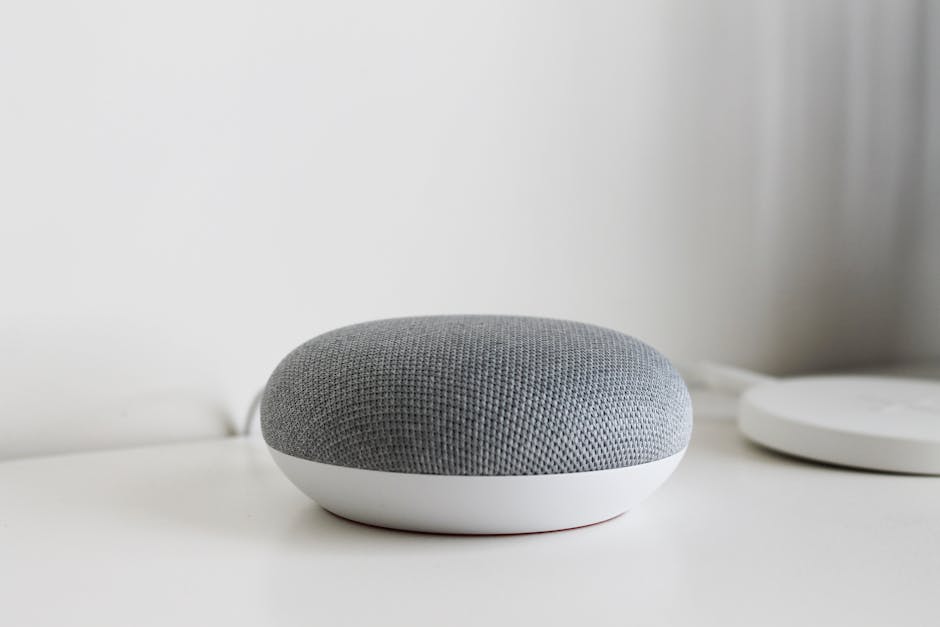
Wired has reported that a Google Home speaker was found to be consuming more Wi-Fi data than every other device on a home network combined, with the writer's subsequent investigation turning up similar behavior in other smart home devices. The finding raises uncomfortable questions about what these always-on, always-listening gadgets are actually doing with a home's internet connection when nobody is paying attention.
To understand why this matters, it helps to recall what smart speakers were sold as. When Google, Amazon, and their competitors began flooding the consumer market with voice-activated home devices, the pitch was simple: a convenient, low-footprint assistant that would answer questions, play music, and control other appliances. The data conversation at the time centered almost entirely on the privacy implications of a microphone that never fully sleeps. Bandwidth consumption was barely a footnote. Most households treat their internet connection as effectively unlimited and have no reason to scrutinize which device is pulling how much data, which means unusual consumption patterns can persist for years without anyone noticing.
The technical architecture of smart speakers has always made high data usage plausible, even if it has rarely been discussed openly. These devices do not merely wait for a wake word in pure local silence. Many continuously sync with cloud servers, receive firmware and configuration updates, participate in quality-of-service telemetry programs, and in some cases stream audio snippets to remote servers for processing. Google, like its competitors, has acknowledged collecting voice data to improve its assistant systems, though the precise volume and frequency of what gets transmitted has never been made fully transparent to consumers. The gap between what companies disclose in privacy policies and what they disclose in plain conversational language to buyers is substantial.
What Wired's report adds to this picture is a dimension that is genuinely underappreciated: the sheer scale of the traffic relative to everything else a typical household runs. A smart speaker sitting idle on a kitchen counter outpacing laptops, phones, and streaming devices in data consumption suggests that whatever is traveling back and forth is not trivial. It is unlikely to be explained entirely by routine firmware updates. The more plausible reading is that the device is engaged in near-continuous communication with Google's infrastructure, the contents and purpose of which are not visible to the person who bought it and placed it in their home.
This fits a longer and troubling pattern in the smart home industry. Researchers and security analysts have periodically demonstrated that consumer IoT devices, from smart TVs to robot vacuums to connected thermostats, frequently transmit far more data than their function requires. The incentive structure explains much of it: hardware margins on these devices are thin, and the behavioral and environmental data they collect has real commercial value. A company that knows when a household wakes up, what music it plays, what questions it asks, and how often people are home is sitting on a remarkably detailed portrait of domestic life. Data, in other words, is part of the product's business model even if it is not part of its advertised feature set.
The consequences here fall on several different groups. For ordinary consumers, the immediate practical concern is bandwidth. Households with metered internet connections or data caps, which are more common in rural areas and lower-income communities, could face real costs from a device behaving this way without their knowledge. Beyond the financial dimension, the finding should prompt anyone with smart speakers to think more carefully about what passive data collection looks like in practice, not as an abstract privacy concern but as a measurable, observable phenomenon.
For Google, the reputational exposure is meaningful. The company has spent considerable effort in recent years trying to reassure users about its data practices, particularly following high-profile controversies around voice recording retention. A report showing that its smart speaker is the single hungriest device on a typical home network invites the exact kind of scrutiny it would prefer to avoid, and it arrives at a moment when regulatory appetite for consumer privacy enforcement is growing in both the United States and Europe.
For the broader smart home industry, the Wired report is a reminder that network-level monitoring is an underused accountability tool. Researchers and journalists who simply watch what devices actually do on a network, rather than relying on what companies say they do, have repeatedly found surprises. That methodology is likely to be applied more aggressively going forward.
What to watch for next is whether Google responds with a substantive technical explanation of the traffic patterns Wired identified, and whether that explanation holds up to independent scrutiny. Equally worth watching is whether other journalists or security researchers begin systematically auditing competing devices in the same way. If they do, the results could quickly reshape how the smart home category is perceived by the consumers it depends on.