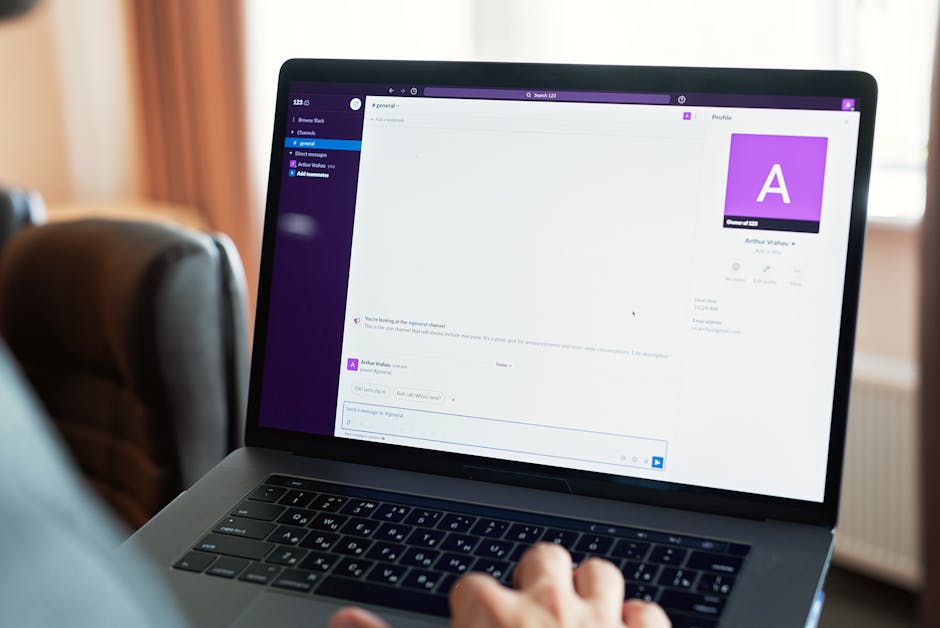
The Verge is reporting that Slack is rolling out a capability called Slackforce Surfaces, which lets users describe a desired output — a chart, a dashboard, a poll, a presentation, or a microsite — directly to Slackbot inside a chat, with AI then pulling from relevant conversations to build that interactive artifact on the spot. The feature effectively turns the chat window into a lightweight no-code development environment driven by natural language.
To understand why this is a meaningful moment, it helps to look at what Slack has been trying to become since Salesforce acquired it in 2021 for roughly 27 billion dollars. That acquisition was always pitched as more than a messaging play. The thesis was that the place where work conversations happen should also be the place where work gets done — that pulling up a CRM record, running a report, or checking a pipeline should not require leaving the thread where the relevant decision is being made. The integration of Salesforce data into Slack workflows has been the slow, grinding project underneath every product announcement the company has made since then. Slackforce Surfaces, with that name doing very little to hide its parentage, looks like the clearest expression yet of what that merger was actually supposed to produce.
The "vibe coding" framing in the headline deserves some unpacking. The term, which originated in AI developer circles to describe prompting a model to write code without specifying precise instructions, has migrated quickly into the broader product conversation as shorthand for intent-driven creation — you describe what you want and the system figures out the implementation. Applying that idea to business reporting is a significant conceptual move. Traditionally, building a dashboard meant either knowing a tool like Tableau or waiting for someone in analytics to build it for you. Prompting a chatbot to assemble one from the residue of a conversation collapses several steps and, more importantly, several dependencies on specialist colleagues.
That said, the gap between a compelling demo and a reliable enterprise tool is where many AI features quietly stall. The specific challenge here is sourcing. The feature, as described by The Verge, draws information from relevant conversations inside Slack. How it defines relevance, how it handles permissions across private channels, and how it manages the inherent messiness of informal workplace language — where decisions are often implied rather than stated — will determine whether the output is genuinely useful or plausibly formatted noise. Enterprise buyers are increasingly sophisticated about this distinction, having watched a generation of AI features overpromise on exactly this kind of synthesis task.
For Slack's competitive position, the stakes are real. Microsoft Teams has spent several years embedding Copilot features across its surface area, including document generation, meeting summaries, and data visualisation linked to the broader Microsoft 365 stack. Google's Workspace has been threading Gemini through Docs, Sheets, and Meet with similar ambitions. Slack has the advantage of being where a significant portion of real, unstructured work conversation still lives — particularly in technology companies and startups — but it has sometimes struggled to translate that conversational richness into structured productivity features that justify its price tier against those bundled alternatives. A feature that turns conversation history into actionable, shareable artifacts is a direct argument that the unstructured data in Slack is more valuable than it currently appears on an invoice.
The consequences will land differently depending on where one sits. For knowledge workers who spend time compiling information from multiple threads before a meeting or a stakeholder review, a tool that automates that synthesis — even imperfectly — represents a genuine reduction in friction. For analytics and operations teams, the more complicated question is whether democratising report creation produces clearer decision-making or just more reports of uncertain provenance. There is a version of this future where every department produces its own dashboards, built on conversational fragments, and no two agree. Governance of AI-generated content inside enterprise tools is a problem the industry has not solved, and Slack will not be the company that solves it unilaterally.
For Salesforce as a whole, the feature is also a proof point in an argument it needs to keep making to investors: that the Slack acquisition is producing compounding value rather than simply holding a large messaging audience. The ability to surface Salesforce data into conversational AI outputs inside Slack is, in theory, the kind of closed loop that justifies the integration strategy. Whether customers experience it that way is a different question.
What to watch for next: how the feature handles permissions and data sourcing in practice, and whether early enterprise customers report the outputs as trustworthy enough to share upward. The reaction from Slack's developer and integration ecosystem will also matter — if third-party data sources can feed these surfaces, the scope expands considerably. And it will be worth watching whether Microsoft and Google accelerate equivalent features in response, since both have the data assets and the distribution to move quickly if Slack demonstrates real traction here.