Ars Technica has reported on research suggesting that Earth may have been on the cusp of a natural glacial expansion beginning roughly 2,000 years ago — a slow cooling cycle that, under ordinary planetary conditions, would have thickened ice sheets and potentially nudged the climate toward another glacial period. The finding carries a striking implication: that industrial-era greenhouse gas emissions did not merely warm a stable climate, but interrupted a longer cooling trajectory that had already begun.
To understand why this matters, it helps to recall how ice ages work. The planet's glacial cycles are driven primarily by subtle, long-period variations in Earth's orbit and axial tilt — the so-called Milankovitch cycles, named for the Serbian mathematician who formalized the theory in the early twentieth century. These cycles operate on timescales of tens of thousands to hundreds of thousands of years, and they govern how much solar energy reaches different latitudes across different seasons. When the geometry is unfavorable for summer melting in the high northern latitudes, snow and ice persist year-round, reflect more sunlight, and gradually build into continent-spanning sheets. The last full glacial maximum ended roughly 20,000 years ago, and the Holocene interglacial — the warm, stable period in which all of human civilization has developed — represents the long tail of that retreat.
The question of where exactly the planet stands in its natural glacial cycle has been an active one in paleoclimatology. Some researchers have argued that the current interglacial is unusually long, sustained in part by early agricultural land clearance and methane emissions from rice cultivation and livestock — a hypothesis associated with climatologist William Ruddiman that remains contested but influential. The new findings reported by Ars Technica appear to add a different layer of detail: not merely that human activity extended the interglacial, but that a detectable cooling trend, one consistent with the opening phase of glacial inception, may have already been underway before fossil fuel combustion reversed it entirely.
The significance of this framing is hard to overstate. Climate skeptics have long pointed to the natural variability of Earth's temperature record as evidence that current warming is simply the planet doing what it always does. Research of this kind cuts directly against that narrative. If the natural background signal was cooling, and the observed signal is dramatic warming, the gap between the two trajectories is even wider than a simple comparison with pre-industrial temperatures suggests. The human forcing on the climate system looks larger, not smaller, when measured against what the planet would otherwise have been doing.
There are also consequences for how scientists and policymakers think about targets and baselines. If the pre-industrial climate was itself a slight deviation from the natural cooling trend — already somewhat warmer than an unperturbed Holocene trajectory would have produced — then questions arise about what a genuinely "natural" baseline even looks like, and whether any realistic emissions-reduction scenario could return the planet to one. This is not a reason for fatalism, but it does complicate the language of climate restoration that has crept into some policy discussions.
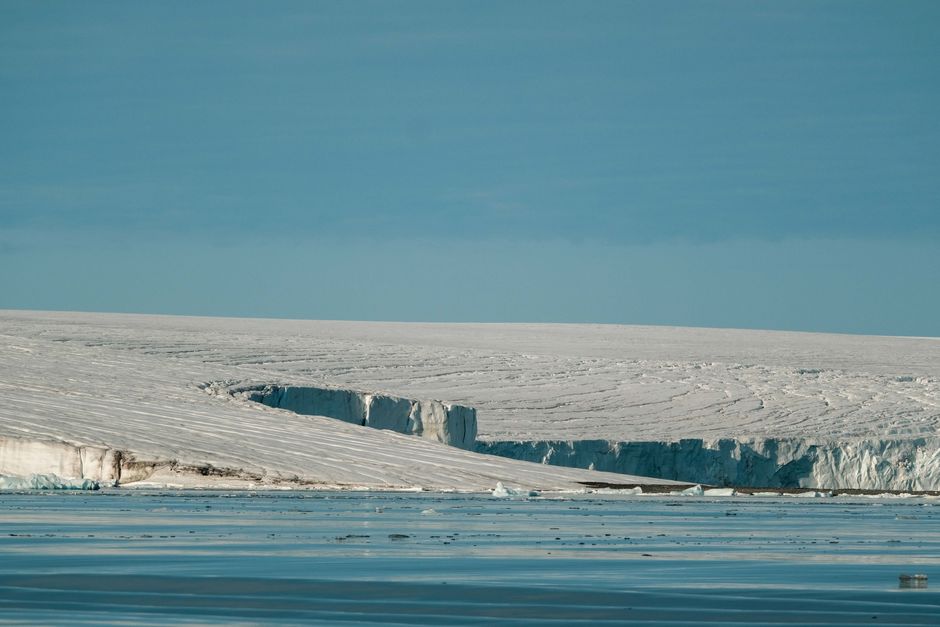
For the glaciological research community, findings like this also raise practical stakes. Ice sheets, particularly in Greenland and West Antarctica, are currently losing mass at rates that concern scientists tracking sea level. The idea that those sheets might, absent human interference, have been modestly gaining mass over the last two millennia reframes the current losses as doubly significant: they represent not a slowdown in growth but an accelerated reversal of a growth phase that was quietly underway.
The finding also invites reflection on deep time and human hubris simultaneously. The forces that build and destroy ice ages are astronomical in scale, operating across geological time. That a few centuries of industrial activity could overpower a 2,000-year planetary cooling trend is, depending on one's disposition, either a testament to the extraordinary potency of greenhouse gases or a sobering reminder of how thoroughly human civilization has become a geophysical force in its own right. The likely reading is both.
What to watch for next is the response from the broader paleoclimate community, particularly any attempts to replicate or challenge the methods used to identify that early cooling signal. Reconstructing temperature trends from two millennia ago requires proxy data — ice cores, pollen records, ocean sediments — each with its own uncertainties. If the finding holds up to scrutiny, it will likely filter into the next major assessment cycle from the Intergovernmental Panel on Climate Change, shaping how the scientific consensus characterizes the counterfactual: the Earth that, without industrialization, we would have inherited instead of the one now being observed.