Microsoft is quietly developing a feature that would allow Xbox owners to convert their physical game libraries into permanent digital licenses, according to sources cited by The Verge. The capability, described as a disc-to-digital system, is currently in testing and would let players redeem owned discs as downloadable titles tied to their accounts.
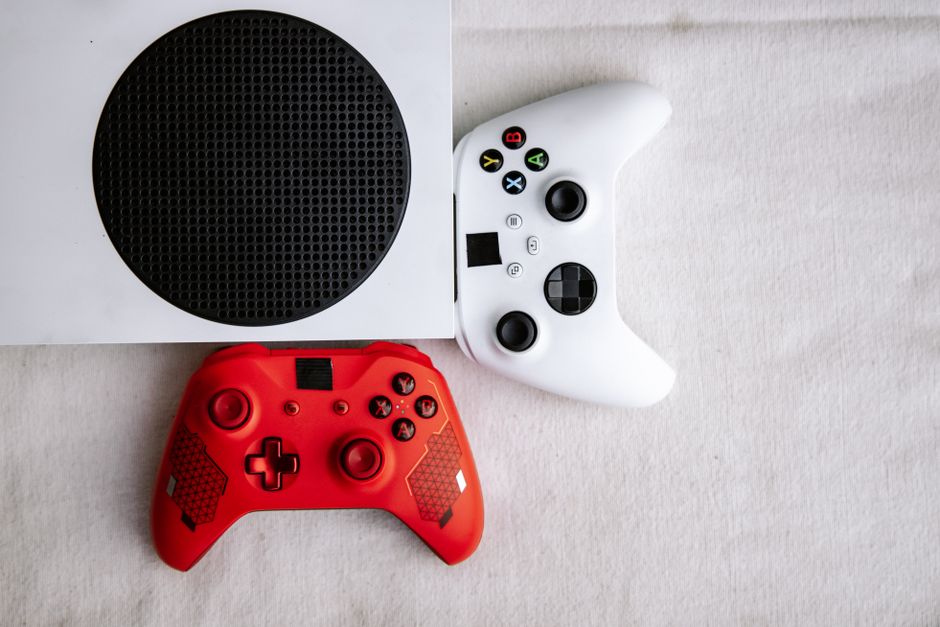
To understand why this matters, it helps to step back and look at where the games industry has been heading for the better part of a decade. Digital distribution has steadily eroded the market for physical media across every entertainment category, and gaming is no exception. Console manufacturers have been nudging players toward downloads for years, partly because digital sales carry better margins and partly because an all-digital ecosystem is easier to manage at scale. Sony moved aggressively in this direction when it introduced discless variants of the PlayStation 5, and Microsoft followed a similar path with the Xbox Series S, a capable machine that shipped without an optical drive entirely. The logical endpoint of that trajectory has always been the elimination of physical game discs altogether, and The Verge's reporting suggests Microsoft is now preparing to make that transition in a way that tries to soften the blow for collectors.
The disc-to-digital concept is not entirely new as an idea, but executing it at scale is a different problem. The fundamental challenge has always been verification: how does a platform holder confirm that a player actually owns a disc without requiring them to insert it every time they want to play? A conversion system presumably solves this by treating the physical disc as a one-time proof of purchase, scanning or registering it through some form of hardware reader, and then issuing a permanent digital entitlement linked to the player's account. Done well, this could feel like a genuine service to longtime players who have built up libraries of physical titles. Done poorly, it creates friction, exclusions, and a customer service nightmare.
The timing of this development matters as much as the feature itself. If Microsoft is preparing to step back from physical disc production, as The Verge's sources suggest, then a disc-to-digital tool functions as much as a political gesture as a technical one. The games industry has long faced criticism from consumer advocates and preservation communities over the impermanence of digital ownership. Physical media, whatever its inconveniences, has historically given players something concrete: a copy they own outright, independent of server uptime or corporate continuity. A conversion feature does not fully address those concerns, since the resulting digital license still depends on Microsoft's ongoing stewardship, but it does acknowledge the legitimate grievance that players who spent real money on physical collections should not simply be abandoned when the hardware moves on.
The consequences will ripple in several directions. For Xbox owners with large physical libraries, the feature could represent meaningful value, assuming the conversion process is broad enough to cover older and third-party titles rather than only recent first-party releases. The scope of which games qualify will be the detail that determines whether this lands as a genuine consumer benefit or a narrowly useful promotional tool. Retailers and the secondary market for physical games would face continued pressure, since a disc-to-digital program implicitly reinforces the message that the disc itself is a transitional artifact rather than a durable product. Game preservation organizations, which have spent years documenting the fragility of digital-only archives, will likely view the move with measured skepticism even if they welcome the acknowledgment of physical libraries. And Sony, having already staked out similar territory, will be watching to see whether Microsoft's implementation earns goodwill or stumbles in ways that can be turned to competitive advantage.
For Microsoft specifically, the strategic calculus is clear enough. The company has spent recent years reorienting Xbox around services, subscriptions, and platform reach rather than hardware exclusivity. Game Pass is the clearest expression of that shift. A disc-to-digital bridge fits neatly into that logic by giving physical owners a path into the digital ecosystem without requiring them to repurchase titles outright, which in turn smooths the migration to a world where Microsoft no longer needs to manufacture and distribute optical media at all.
What to watch for next is the announcement of terms. The feature's value will be almost entirely determined by which titles are eligible, whether there are conversion limits or fees, how the verification process actually works, and what happens to those digital licenses if a player's account is suspended or Microsoft's policies change. A broad, generous rollout with strong consumer protections would be a meaningful commitment. A restricted program with significant carve-outs would confirm the more cynical reading, that this is transition management dressed as consumer advocacy. The details, when Microsoft eventually makes them public, will tell the real story.


