US President Donald Trump has announced that the United States intends to impose a naval blockade on the Strait of Hormuz, one of the world's most strategically significant waterways. The move has prompted widespread questions about what such an action would involve and what consequences it could carry for global trade and geopolitics.
A naval blockade is a military operation in which a country deploys warships and other assets to prevent vessels from entering or leaving a specific body of water. Historically, blockades have been used as tools of economic and military pressure, effectively cutting off a nation or region from maritime trade without necessarily resorting to direct armed conflict.
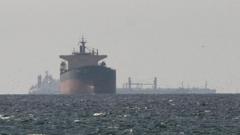
The Strait of Hormuz is a narrow waterway sitting between Iran and the Arabian Peninsula, connecting the Persian Gulf to the Gulf of Oman and the wider Arabian Sea. It is considered one of the most critical chokepoints on the planet, with a significant portion of the world's oil supply passing through it daily, making any disruption there felt almost immediately in global energy markets.
In practical terms, implementing a blockade in the strait would require a substantial naval presence capable of monitoring and intercepting vessel traffic. The United States Navy, with its considerable firepower and existing presence in the region, would be the primary force behind such an operation.
However, a blockade of this nature would carry serious legal, diplomatic, and military implications. Under international law, blockades are complex undertakings that must meet specific criteria to be considered lawful, and enforcing one in contested international waters could risk direct confrontation with Iran, which has long claimed influence over the strait and has previously threatened to close it.
The announcement has raised alarm among US allies and trading partners, many of whom rely on the free passage of oil and goods through the waterway. Analysts warn that even the threat of a blockade could trigger significant volatility in global oil prices and diplomatic tensions across the Middle East and beyond.