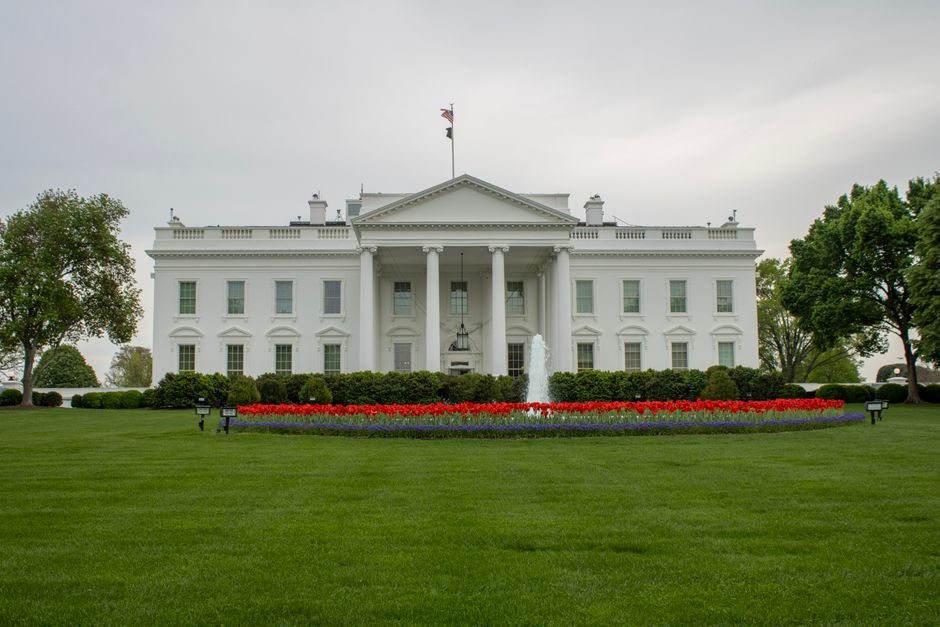
The Verge is reporting on an apparent conflict between the White House and Anthropic over something called Fable, a dispute it describes as a petty feud with the potential to fundamentally reshape the frontier AI field. The details emerging from that newsletter suggest the collision between political interest and corporate AI development has moved past the theoretical and into something operationally consequential.
To understand why that framing matters, it helps to situate Anthropic within the current landscape. The company occupies a genuinely unusual position: it was founded by former OpenAI researchers who built their identity around safety-conscious AI development, and it has spent years cultivating a reputation as the responsible adult in a room full of move-fast competitors. That positioning has made it attractive to both investors and, crucially, to government partnerships. Anthropic has been more willing than some rivals to engage with regulatory conversation, which made the relationship between the company and federal policymakers appear relatively cooperative until recently.
The White House's interest in frontier AI is not new, but the texture of that interest has shifted considerably depending on the administration in power. Under one set of priorities, the federal government treats advanced AI as a national security asset requiring careful stewardship and export control. Under another, the emphasis falls on removing friction from domestic development to outcompete China. What remains consistent across those postures is that Washington increasingly views frontier AI companies not simply as technology vendors but as strategic actors whose decisions have geopolitical weight. That framing gives the executive branch an argument for intervention that goes well beyond traditional consumer protection or antitrust rationales.
Fable, as a specific flashpoint, is not yet widely known outside the AI research and policy communities, which itself tells a story. Disputes that bubble up through newsletter reporting rather than formal regulatory proceedings often signal that something is happening at the level of informal pressure, access negotiation, or pre-decisional government deliberation — none of which leave a clean paper trail. The Verge's characterization of the conflict as a petty feud is worth taking seriously even as it should be read carefully. Petty feuds between powerful institutions rarely stay petty. They tend to calcify into policy, or into the quiet withdrawal of cooperation that shapes what gets built and what gets constrained.
The likely consequences here run in several directions. For Anthropic, the most immediate risk is the kind of regulatory uncertainty that makes long-range product planning difficult. A company that has staked part of its commercial identity on being a trustworthy partner to government faces a particular vulnerability when that relationship sours, because the trust premium it charges — in credibility, in enterprise contracts, in favorable press coverage — depends on the partnership appearing durable. If the White House is openly in conflict with Anthropic over a specific project or capability, that narrative becomes harder to sustain.
For the broader AI industry, the more significant consequence is what this suggests about the template for government-industry engagement going forward. If even the most diplomatically careful of the frontier labs can end up in a public-facing fight with the executive branch, the implied message to less conciliatory companies is complicated. It could be read as evidence that engagement offers no real protection, which might push some actors toward a more defiant posture. Alternatively, it could reflect something specific to Fable — a particular capability or deployment context that crossed a line the administration felt it could not ignore — in which case the lesson is more targeted.
There is also a downstream effect worth considering for the research community and for AI governance advocates. A great deal of the optimism around responsible AI development rests on the assumption that safety-focused labs and thoughtful regulators can find common ground. Public friction between Anthropic and the White House, whatever its ultimate cause, erodes that assumption and may discourage the kind of voluntary cooperation that has substituted, imperfectly but meaningfully, for formal regulation in the United States.
What to watch for next is relatively clear. The first signal will be whether this conflict remains at the level of reported tension or escalates into something with formal regulatory teeth — an executive order, a contracting decision, a public statement from either side that hardens positions. The second is how Anthropic responds publicly, and whether it recalibrates its Washington strategy in ways that are visible from the outside. The third, and perhaps most consequential, is whether other frontier AI companies treat this episode as a warning or an opportunity — because in a competitive landscape, one company's regulatory difficulty is frequently another's opening.