Trump's Blockade Threat Raises Risks and Leaves Predicaments Unchanged
A new dimension of pressure has entered the already volatile standoff between the United States and Iran, as President Donald Trump's threat of a naval blockade raises the stakes in a conflict that analysts say remains as intractable as ever. The threat has sent ripples through diplomatic and military circles, yet observers warn it may do little to resolve the underlying tensions that have long defined relations between Washington and Tehran.
At its core, the situation has evolved into a battle of endurance. The central question is no longer simply one of military capability, but rather a test of competing tolerances — how much punishment Iran can absorb from strikes, and how much political and strategic cost the Trump administration is willing to bear as the conflict continues.
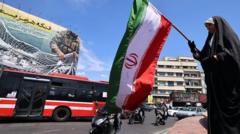
Iran has historically demonstrated a capacity to withstand significant economic and military pressure, having endured years of crippling international sanctions while maintaining its regional influence and nuclear ambitions. The Islamic Republic's leadership has repeatedly signaled that it will not capitulate under coercion, a posture that complicates any strategy built around escalating threats.
For Trump, the calculus is equally complex. Military escalation carries with it the risk of broader regional destabilization, potential retaliatory actions targeting American assets or allies, and the uncertain domestic political consequences of a prolonged confrontation. A blockade, in particular, is considered an act of war under international law, a reality that could draw in other global powers.
The standoff underscores a fundamental dilemma that has challenged multiple administrations. Neither diplomatic engagement nor maximum pressure has succeeded in fundamentally altering Iran's strategic course, leaving policymakers caught between options that are either insufficient or dangerously escalatory.
As tensions remain elevated, the international community watches closely, aware that miscalculation by either side could rapidly transform a war of wills into something far more consequential. For now, the predicaments on both sides appear firmly unchanged.