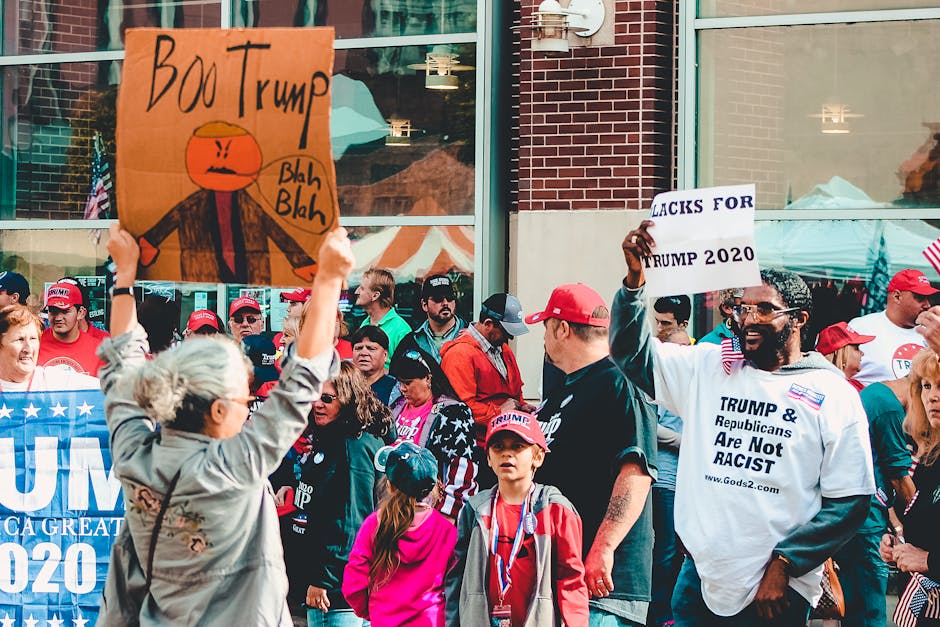
TechCrunch is reporting that former President Donald Trump has called for artificial intelligence to be rebranded under a new name, and has announced plans to establish what he is calling an AI Force, a new entity presumably modeled on the logic that gave the Space Force its own branch-level identity within the American defense structure. Trump also claimed, according to TechCrunch, that public backlash against AI is a Democratic hoax, offering no evidence for that assertion.
The rebranding proposal, taken on its own, would be easy to dismiss as political theater. But placed in the broader context of how American political figures have learned to weaponize terminology, it deserves more careful attention. The history of technology policy is littered with examples of nomenclature doing real work. When "net neutrality" became a partisan flashpoint, opponents spent years trying to rename it "internet regulation" precisely because the original phrase polled well with ordinary voters. The instinct to rename a thing you cannot easily defeat is not new, and it is not stupid. If the term "AI" has accumulated enough negative associations in the public mind — job displacement, deepfakes, algorithmic bias, existential risk — then a rebranding effort, however shallow, follows a recognizable political logic.
What makes this particular moment notable is where it sits in the technology industry's own political realignment. Over the past several years, and accelerating sharply around the 2024 election cycle, a significant faction of Silicon Valley's leadership class moved toward open alignment with Republican politics. Figures who built their fortunes on disruption began lending that rhetoric to a political movement that offered them, among other things, relief from the regulatory pressure that had been building in Washington and Brussels. AI was central to that bargain. The major AI laboratories found themselves navigating an uncomfortable position: their technology was generating genuine public anxiety, their workforces leaned heavily progressive, and yet the political winds were shifting in ways that made federal intervention in AI development a live possibility under one administration and a remote one under another.
Against that backdrop, Trump's framing of AI skepticism as a partisan hoax is doing something specific. It is attempting to collapse a genuinely broad coalition of critics — which includes conservative bioethicists, national security hawks worried about adversarial AI use, labor economists across the political spectrum, and civil liberties organizations of every stripe — into a single Democratic talking point. The likely reading is that this serves the interests of AI developers who would prefer that criticism of their industry be understood as politically motivated rather than substantively grounded. Whether Trump arrived at this framing independently or was nudged toward it by allies in the technology sector is an open question, but the alignment of interests is not subtle.
The AI Force announcement is a different kind of move and carries different consequences. The Space Force, which Trump created during his first term, was greeted with considerable mockery before establishing itself as a legitimate reorganization of how the American military manages satellite systems and space-based assets. The underlying logic was sound even if the branding invited jokes. An AI Force, however, raises immediate questions about mandate, jurisdiction, and relationship to existing bodies. The Pentagon, the intelligence community, the National Security Agency, and numerous civilian agencies already have substantial AI programs. Creating a new entity without carefully delineating its authority risks producing exactly the kind of bureaucratic redundancy that defense reformers have spent decades complaining about. Whether this announcement reflects a detailed organizational plan or a headline-level instinct is, at this stage, unclear.
For the AI industry, the short-term consequences of Trump's posture are probably positive, at least in the narrow sense that an administration framing AI criticism as partisan is unlikely to impose aggressive domestic regulation. For the companies racing to deploy AI systems at scale, reduced regulatory friction has real commercial value. The longer-term consequences are harder to predict. Tying the legitimacy of AI development to a particular political figure and a particular political moment creates its own fragility. Public trust in technology, once politicized, does not easily depoliticize.
What to watch for next is whether the AI Force proposal acquires any institutional substance — executive orders, budget requests, congressional testimony — or whether it remains at the level of announcement. The rebranding suggestion is worth monitoring too, not because any top-down renaming campaign is likely to succeed with the public, but because the attempt itself would signal how seriously the administration intends to manage the narrative around artificial intelligence rather than the technology itself. And it is worth watching how the major AI laboratories respond, publicly and privately, to being handed this kind of political cover. Their reaction will say something important about how they understand their own long-term interests.