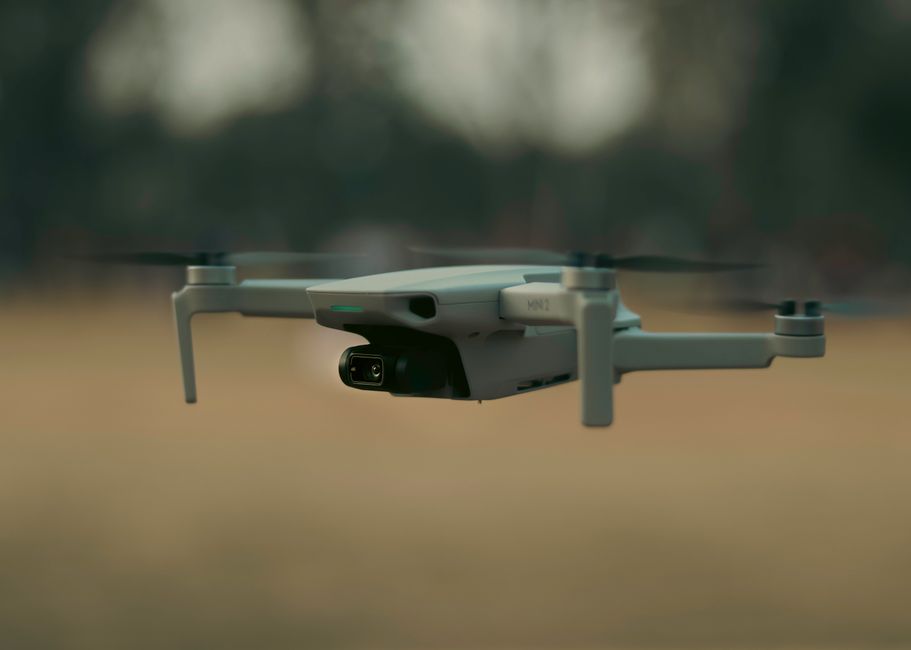
The Federal Communications Commission has moved to crack down on companies suspected of helping DJI circumvent a United States ban on foreign drone technology, according to a report from The Verge. The action targets firms including Xtra and Skyrover, which The Verge has previously identified as vehicles through which DJI hardware has allegedly continued to reach the American market despite federal restrictions.
To understand why this matters, it helps to step back and look at how DJI arrived at this position in the first place. The Chinese company is, by a considerable margin, the dominant force in consumer and commercial drone manufacturing globally. Its cameras and aerial platforms became the default choice for filmmakers, agricultural operators, public safety agencies, and hobbyists alike because the products were genuinely excellent and competitively priced. That dominance, however, eventually attracted the kind of scrutiny that comes with being a Chinese technology company operating at scale inside American infrastructure. Concerns about data security, about where footage might be stored or transmitted, and about the company's relationship with the Chinese government led the United States government to place DJI on restricted trade lists. The Department of Defense designated it a company allegedly working with China's military. The practical effect was to make it increasingly difficult for DJI to operate through normal commercial channels in the United States.
What followed was, from a market perspective, almost predictable. When a dominant product is restricted but demand for it does not disappear, the space between prohibition and enforcement tends to fill quickly. The Verge reported last year that Xtra had emerged as a conduit allowing DJI cameras to enter the country, and that Skyrover appeared to be selling what were essentially DJI drones under a different brand identity. These are not isolated improvisations. They represent a broader pattern of regulatory arbitrage, where the letter of a ban is technically observed while its practical effect is substantially undermined. The suspicion, as The Verge has framed it, is that DJI itself may be behind several such entities rather than these being independent third parties who simply found an opportunity.
The FCC's involvement adds a dimension that goes beyond the trade and national security apparatus that has driven the DJI story so far. The commission's jurisdiction typically concerns radio frequency emissions and device authorization, meaning that drones sold in the United States must be certified to operate on approved frequencies without causing harmful interference. If companies are importing hardware that lacks proper FCC authorization, or if they are relabeling devices in ways that misrepresent their technical specifications, the commission has grounds to act independent of whatever the Defense Department or the Commerce Department may be doing. This suggests the enforcement architecture around DJI is becoming more layered, with multiple agencies approaching the problem through their own distinct legal authorities rather than relying on a single restriction to do all the work.
The consequences of this development fall unevenly across several groups. For operators who have continued using DJI equipment professionally, whether in film production, real estate, inspection work, or public safety, there is growing legal and practical uncertainty. Equipment that has been purchased and deployed in good faith through what appeared to be legitimate channels may now be caught up in a regulatory action that calls the legitimacy of those channels into question. For the companies directly named, the FCC's attention represents serious exposure, since operating without proper device authorization or facilitating the evasion of federal restrictions carries meaningful penalties. For DJI itself, if the allegations of corporate involvement in these workaround entities are substantiated, the reputational and legal stakes are considerably higher than they would be for simple trade restriction violations.
There is also a broader competitive story at work. American and European drone manufacturers have long argued that DJI's market position was built in part on conditions they could not replicate, and that the restrictions on DJI represented an opportunity to develop a viable alternative ecosystem. Every enforcement action that tightens the squeeze on DJI's informal channels in the United States is, in theory, good news for those competitors. Whether any of them have products mature enough to absorb displaced demand is a separate question.
What to watch for next is whether the FCC's action leads to formal proceedings against the named companies, and whether those proceedings produce evidence of direct organizational ties to DJI. The more significant signal will be whether other agencies coordinate their responses in ways that close the enforcement gaps these workaround structures have exploited. If Xtra and Skyrover are two of many such firms, as The Verge's framing implies, the question is whether regulators are prepared to play an ongoing game of identification and suppression, or whether they can find a structural approach that makes the workarounds impractical in the first place.


