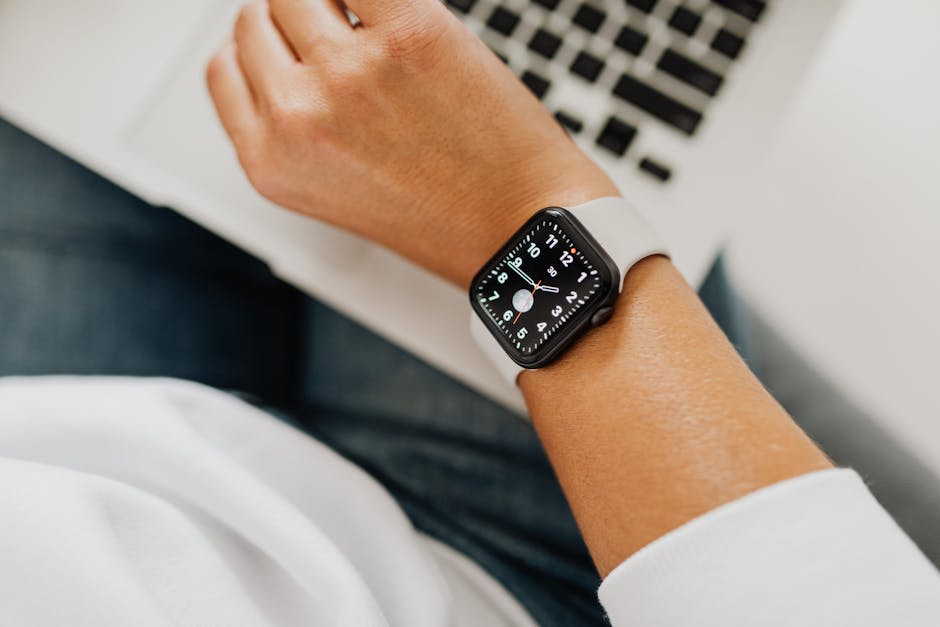
The Verge is reporting that recent hands-on time with the watchOS 27 developer beta has produced a notably different impression of Siri on Apple Watch — one that moves the assistant from a marginal convenience feature to something that makes the device feel, in their words, like a wrist computer in a more genuine sense than before.
To understand why that framing matters, it helps to remember what Apple Watch has always been fighting against. Since its debut in 2015, the device has occupied an awkward position in the product landscape. It is too capable to be dismissed as a fitness tracker, yet for most of its existence it has been too dependent on the iPhone sitting in a nearby pocket to be considered truly independent. Siri, which launched alongside the watch from day one, was supposed to be a differentiating feature — the idea being that voice interaction was the most natural interface for a screen measured in millimeters. In practice, as The Verge's account makes clear, it largely settled into a narrow set of use cases. Setting a kitchen timer with wet hands became the canonical example, and the fact that this example became a cliché in tech coverage tells its own story about how limited the real-world utility felt.
The broader context here is Apple's multi-year effort to make its AI infrastructure actually deliver on the ambient intelligence promise that has been hanging over the industry since large language models entered mainstream conversation. Apple Intelligence, the company's branded framework for on-device and hybrid AI processing, was announced with considerable fanfare but rolled out cautiously and unevenly. Siri in particular drew criticism for lagging well behind competitors in conversational depth and contextual awareness. While Google Assistant, Amazon Alexa, and more recently the various interfaces built on top of OpenAI's models demonstrated increasingly fluid multi-turn conversations and genuine task completion, Siri on the wrist remained essentially a voice-activated button press.
The watchOS 27 developer beta, if The Verge's impressions hold up under wider scrutiny, suggests Apple may be closing that gap in a meaningful way on the platform where it arguably matters most. The wrist is a constrained environment by design. There is no keyboard. Interactions are brief by necessity. An assistant that can actually parse intent, carry context across a conversation, and complete multi-step tasks without requiring the user to reach for a phone is not merely a better Siri — it is a different value proposition for the hardware itself.
The likely consequences of this, if the shipping version performs consistently with the beta, are layered. For Apple, it offers a chance to re-energize a product category that has faced questions about its ceiling. Apple Watch remains the dominant smartwatch globally, but smartwatch adoption as a category has been slower to saturate than smartphones. An Apple Watch that can function as a genuinely capable AI interface at the wrist — answering complex questions, managing tasks, interpreting health data in context — makes a more compelling case to the significant portion of iPhone owners who have not yet bought in. It also deepens the lock-in for those who have, since a more capable Siri on watchOS is presumably most useful when it has access to the full Apple ecosystem.
For competitors, the implications are pointed. Google's Pixel Watch and Samsung's Galaxy Watch series have their own AI ambitions, and both companies have been aggressive about integrating generative AI features into their wearable platforms. If Apple demonstrates that the watch form factor is where AI assistance becomes indispensable rather than merely interesting, it raises the stakes for every other player in the space. The suggestion here is not that Apple has definitively won the AI wearables race, but that it may be establishing the terms on which that race gets judged.
There are reasons for measured expectations. Developer betas, by their nature, showcase what a feature can do rather than what it reliably does across millions of daily users. AI assistants are notoriously variable — impressive in controlled demonstrations, occasionally baffling in mundane ones. The gap between a reviewer's enthusiastic beta session and a consistent experience for someone asking Siri something unexpected on a Tuesday morning has tripped up this category before.
What to watch for next is straightforward. The first signal will be whether Apple's public release of watchOS 27 maintains the performance quality The Verge found in the developer build, or whether rough edges emerge at scale. Beyond that, attention should go to how Apple positions Siri's wrist capabilities in its fall hardware marketing — if the company is confident in what it has built, that confidence will show up in how prominently the feature is featured. And the deeper question, the one that will take months of real-world usage to answer, is whether this update represents a genuine inflection point for the Apple Watch or another incremental improvement that reviewers praise and users mostly ignore.


