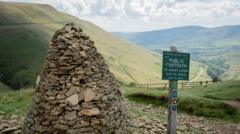
The Peak District, one of Britain's most beloved landscapes, is marking a significant milestone this year as it celebrates the 75th anniversary of becoming the United Kingdom's first national park. However, the region's storied history as a destination for visitors stretches back far longer than that landmark designation.
The journey toward public access to the Peak District was far from straightforward. The area was historically guarded by landowners who restricted ordinary people from walking its rugged moorlands and dramatic valleys, creating deep tensions between the working classes of nearby industrial cities and the privileged few who controlled the land.
One of the most defining moments in the Peak District's history came through the act of mass trespass, a form of civil disobedience that would eventually help reshape access laws across the country. Groups of determined walkers deliberately crossed restricted land to assert what they believed was a fundamental right to enjoy the natural environment, drawing public attention to the inequality of land ownership and access.
The railways also played a transformative role in opening up the Peak District to a wider audience. As rail networks expanded during the industrial era, workers from cities like Manchester and Sheffield found themselves able to reach the countryside with relative ease, fuelling a growing appetite for outdoor leisure and escape from the grime and noise of urban life.
Even the area's colourful and sometimes irreverent place names have contributed to its distinctive character and charm, adding a layer of local folklore and personality that continues to delight visitors today. These quirks of geography and nomenclature reflect the deep human history embedded within the landscape itself.
When the Peak District was formally designated as the UK's first national park in 1951, it represented the culmination of decades of campaigning, protest and political change. The designation was a recognition that wild and beautiful spaces should be accessible to everyone, not merely the privileged.
Today, the Peak District attracts millions of visitors annually and remains a cherished escape for people across the country. As it marks 75 years of national park status, its history serves as a reminder of how ordinary people fought to reclaim their connection to the natural world.