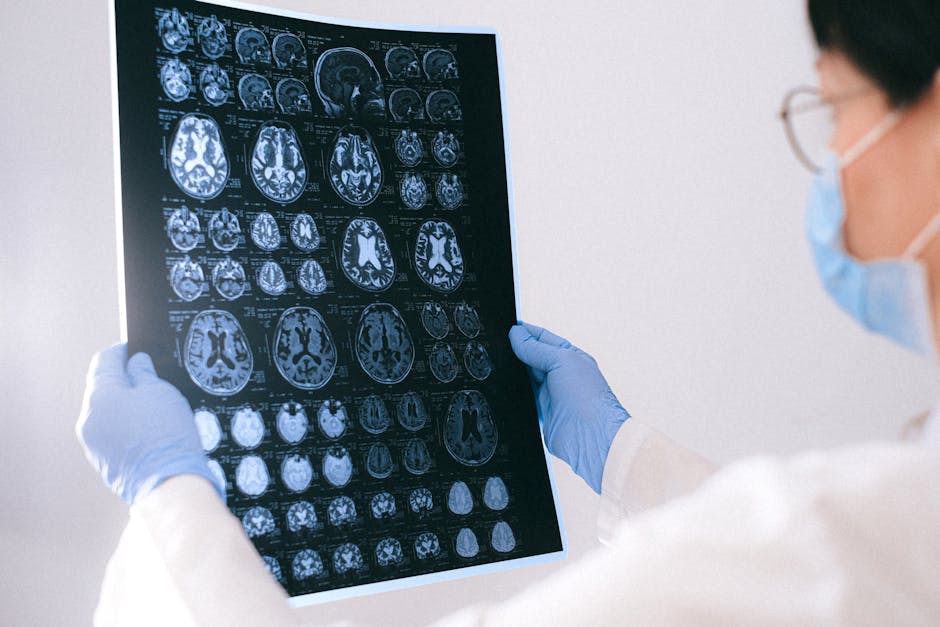
Research into how psychedelic substances alter brain function has taken another significant step forward, according to reporting by Ars Technica, which examined new findings on the neurological changes that accompany psychedelic experiences, including the phenomenon users often describe as a dissolution of the boundary between self and world.
To understand why this matters, it helps to appreciate how dramatically the scientific conversation around psychedelics has shifted over the past two decades. For much of the late twentieth century, these compounds — psilocybin, LSD, DMT, and their chemical relatives — were effectively exiled from mainstream research. Regulatory barriers erected in the wake of the 1970s drug panics made clinical study nearly impossible, and institutional funding dried up almost entirely. The science stagnated while anecdotal reports from millions of users accumulated, largely unexamined. What has happened since the early 2000s amounts to a quiet rehabilitation. Research groups at institutions including Johns Hopkins, Imperial College London, and NYU began winning approval for careful, controlled trials, and the results were striking enough to force a reassessment. Psychedelics appeared to produce durable improvements in patients with treatment-resistant depression, end-of-life anxiety, and addiction, and the effect sizes in some trials were larger than those seen with conventional pharmacology.
The neuroscience running alongside that clinical work has been equally provocative. Early imaging studies using fMRI and other tools revealed that psychedelics do something unusual to a brain network known as the default mode network, a constellation of regions associated with self-referential thought, mind-wandering, and what researchers sometimes call the narrative self — the ongoing internal story a person constructs about who they are. Under psychedelics, activity in this network appears to decrease markedly, and connectivity patterns across the brain become less rigid and more fluid, with regions that rarely communicate under normal conditions suddenly exchanging signals. The subjective experience that often accompanies these changes — a sense of ego dissolution, of boundaries between the self and the outside world becoming permeable or disappearing entirely — maps onto those neurological findings in ways that researchers find genuinely illuminating. It suggests that what people report as mystical or unitive experience may have a traceable biological substrate, which is both a philosophically interesting result and a practically useful one if that state is connected to the therapeutic benefit.
The new look Ars Technica describes fits into this accelerating trajectory. The likely reading is that investigators are refining their models of exactly how psychedelics reorganize neural architecture, moving beyond early observations toward more mechanistic accounts. This matters for several reasons. From a purely scientific standpoint, understanding how a molecule temporarily restructures the functional organization of the brain offers clues about how the brain constructs ordinary consciousness, which remains one of the deepest unsolved problems in neuroscience. If disrupting certain connectivity patterns consistently produces the feeling of unity with the world, that is informative about what maintains the ordinary sense of a bounded self. The findings may also help explain why the effects of a single psychedelic session can persist for months — a duration wildly out of proportion to how long the drug remains in the body — suggesting that the experience triggers some kind of lasting reorganization rather than simply producing a temporary chemical effect.
The consequences fan out in several directions. For pharmaceutical developers and the growing number of companies pursuing psychedelic-assisted therapy as a regulated treatment, better mechanistic understanding is commercially valuable. It opens the possibility of designing compounds or therapeutic protocols that reliably induce the neurological states associated with positive outcomes, and potentially of separating the therapeutic effect from the intensity of the hallucinatory experience, which remains a practical obstacle to wide clinical deployment. For regulators, clearer neuroscience makes the conversation about approval pathways more tractable. The FDA has already granted breakthrough therapy designation to psilocybin for depression, and the science of what is actually happening in the brain informs how regulators think about dosing, monitoring, and safety. For patients, the long-term significance depends on how quickly this basic research translates into accessible, approved treatments — a process that remains slow and uncertain.
There are also broader cultural implications worth noting. Each credible scientific paper that treats the altered states induced by psychedelics as legitimate objects of neurological inquiry normalizes a line of research that was, not long ago, professionally risky. That normalization attracts funding, recruits researchers, and accelerates the cycle.
What to watch for next is whether the findings Ars Technica describes contribute to a more unified theoretical framework — something the field has lacked. Competing models exist for how psychedelics produce their effects, and the science has not yet converged on a consensus account. Any study that meaningfully constrains those competing explanations moves the field closer to the kind of settled mechanistic story that tends to unlock both serious investment and serious regulatory engagement. The pace of publication in this space suggests that convergence may be closer than it once seemed.