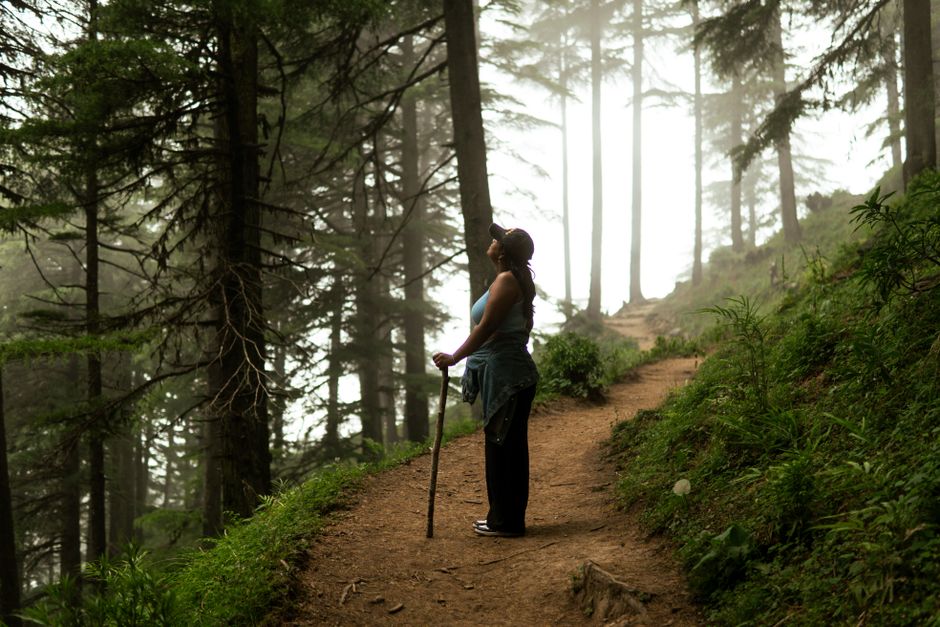
The Verge has drawn attention to On Trails, a book that weaves together the experience of hiking with threads of science and history, positioning it as a work that speaks to readers who find themselves drawn to wild places even when circumstance keeps them close to home.
To understand why a book like this lands the way it does, it helps to appreciate the particular hunger it is trying to satisfy. There is a long tradition of nature writing that does more than describe landscape — it uses the physical act of moving through the world as a lens for examining deeper questions about human perception, ecology, and time. Writers from Henry David Thoreau onward have understood that the trail is not just a path through trees but a kind of thinking machine, a place where the rhythm of walking loosens ideas that sitting still keeps knotted. On Trails appears to operate in this tradition, using the ostensibly simple act of following a path as a doorway into questions that range across biology, anthropology, and the deep history of how living things navigate their environments.
The science of trails is genuinely richer than most people appreciate. Trails are not arbitrary. They encode information — about terrain, about the behavior of animals and humans over generations, about the path of least resistance through a complex landscape. Researchers who study animal movement have found that the routes worn into the earth by repeated passage reveal something close to collective intelligence, whether the travelers doing the wearing are elk, ants, or long-distance hikers. The history embedded in a trail can stretch back thousands of years, with human paths often following animal paths that are older still. A book that takes this seriously has real scientific material to work with, not merely scenic backdrop.
At the same time, the cultural history of hiking as a leisure activity is itself a story worth telling carefully. Walking for pleasure, particularly in wild or remote terrain, is a relatively recent invention in the Western context, emerging roughly alongside industrialization and urbanization. The more people moved into cities, the more they began to romanticize and then actively seek the landscapes they had left behind. The development of marked trail systems, hiking clubs, and eventually national park infrastructure followed from this shift in sensibility, and the story of those institutions is tangled up with questions of access, class, and which bodies have historically been welcomed in wild places and which have not.
The detail The Verge's account lets slip — that the writer engaging with the book can no longer backpack due to physical limitation and the demands of parenthood — points toward something the book is likely doing intentionally. A great deal of nature writing implicitly assumes an able body and unencumbered schedule, and work that speaks to readers who love wildness but cannot always reach it is filling a gap that the genre has not always acknowledged. The likely reading is that On Trails earns affection not simply by describing trails but by making the experience of them intellectually available to people who are experiencing them at a distance, whether that distance is physical, temporal, or circumstantial.
The consequences of a book like this finding an audience extend in modest but real directions. Nature writing that takes science seriously tends to shift how general readers think about the natural world — not just what it looks like, but how it works and why it has the shape it does. If On Trails reaches readers who might not otherwise pick up ecology or behavioral biology, it functions as a kind of on-ramp to those fields. Publishers and editors pay attention to what crosses over in this way, and successful books in this hybrid register tend to encourage more of the same, gradually raising the scientific literacy embedded in popular writing about the outdoors.
There is also something to be said for the timing. Interest in hiking and outdoor recreation has, by most available measures, grown substantially in recent years, accelerated by periods when urban life felt constrained and people looked for activities that felt both safe and restorative. That enlarged audience is now hungry for material that goes beyond trail guides and gear reviews, and books that can hold the science and the history alongside the felt experience of walking are well positioned to find readers.
What to watch for next is whether On Trails develops the kind of sustained word-of-mouth that moves a book from reviewed to recommended — the difference between appearing on a list and being pressed into someone's hands. Books in this genre tend to travel through communities of practice, among hikers, naturalists, and science readers who share recommendations with some intensity. If it takes hold there, the conversation around it will likely deepen, and the questions it raises about trails, movement, and the long history of living things finding their way through the world may get the wider hearing they appear to deserve.