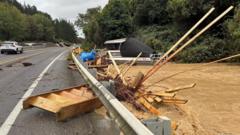
New Zealand has declared a state of emergency in its capital Wellington as severe flooding swept through the region, causing widespread destruction and forcing authorities to take urgent action.
Footage circulating on social media captured the full scale of the disaster, showing vehicles completely submerged in floodwaters, trees uprooted by the force of the storm, and homes struck by devastating landslides. The scenes drew immediate concern from residents and officials across the country.
The state of emergency declaration grants local and national authorities expanded powers to coordinate rescue operations, deploy resources, and issue evacuation orders where necessary. Such declarations are typically reserved for events that overwhelm the normal capacity of emergency services.
Wellington, situated at the southern tip of New Zealand's North Island, is known for its rugged, hilly terrain and exposure to powerful weather systems that sweep in from the Cook Strait. These geographic conditions can make the city and its surrounding communities particularly vulnerable to rapid flooding and land instability during intense rainfall events.
New Zealand has faced a series of significant weather events in recent years, underscoring growing concerns about the increasing frequency and severity of extreme weather linked to changing climate patterns. Emergency management teams across the country have been working to strengthen response frameworks in light of these ongoing challenges.
Authorities have urged residents in affected areas to remain indoors, avoid floodwaters, and follow instructions from emergency services. The full extent of damage and any potential casualties had yet to be formally confirmed as response efforts continued.
The situation remained developing, with emergency crews working to reach those potentially trapped or cut off by damaged infrastructure. Officials were expected to provide further updates as conditions allowed assessments to take place.