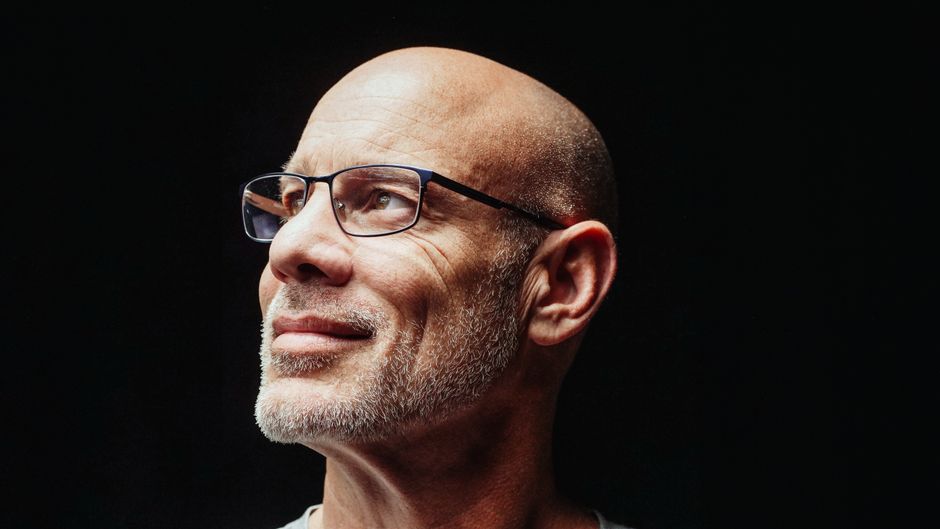
TechCrunch is reporting that Reed Hastings, co-founder and chairman of Netflix, is set to leave the company's board of directors. Hastings built Netflix from a DVD-by-mail startup into one of the most consequential media companies in the world, reshaping how entertainment is produced, distributed, and consumed across two distinct technological eras.
To understand the weight of this departure, it helps to trace the arc of what Hastings actually built. Netflix began in 1997 as a direct challenge to the physical video rental model dominated by Blockbuster, offering DVDs through the mail with a subscription structure that eliminated late fees — a friction point that had quietly irritated consumers for years. That alone would have made it a notable business. What followed made it historic. When broadband internet reached sufficient penetration, Hastings and his team made a calculated bet on streaming at a moment when most media incumbents still regarded the internet as a supplementary channel rather than an existential one. That bet proved correct in a way that restructured the entire entertainment industry.
The transition from discs to streaming was not simply a delivery upgrade. It was a fundamental rethinking of the relationship between content and audience. Netflix eventually moved further still, becoming a major content producer in its own right, which forced traditional studios to reckon with a competitor that was simultaneously their distributor and their rival. That competitive pressure accelerated the so-called streaming wars, drawing in Disney, HBO, Amazon, Apple, and a cascade of others. Every one of those companies made strategic decisions, some of them enormously expensive, partly in response to the path Hastings had already walked.
Hastings stepped back from the chief executive role in early 2023, passing that position to Greg Peters and Ted Sarandos, who had long been seen as the operational architects of Netflix's content and product strategy. His move to a purely board-level role at that point was widely interpreted as a managed and orderly transition rather than a rupture — the kind of founder succession that venture capitalists and governance scholars tend to hold up as a model. A subsequent departure from the board entirely follows a recognizable pattern in technology company history, where founders gradually loosen their formal ties to institutions they created once professional management has stabilized and the company's strategic direction is no longer in question.
The likely reading here is that Netflix's leadership considers the company mature enough to operate without even the symbolic anchor of its founder on the board. That is a significant institutional statement. Boards, particularly at technology companies with strong founder cultures, often retain founding figures well beyond their operational usefulness because of the cultural and reputational signal they send to employees, investors, and partners. Choosing to let that signal go suggests internal confidence in the current executive team and, perhaps, a desire to close a particular chapter in the company's identity.
For shareholders and analysts, the immediate question will be whether this departure introduces any uncertainty into Netflix's governance at a moment when the company is navigating real strategic complexity. The password-sharing crackdown, the expansion into advertising-supported tiers, competition from both established studios and newer entrants, and the ongoing challenge of sustaining subscriber growth in saturated markets are all live concerns. None of them are obviously connected to Hastings's board presence, but markets occasionally react to founder departures with a wariness that is more psychological than rational.
For the broader technology and media industries, the more interesting consequence may be symbolic. Hastings represents a particular generation of Silicon Valley thinking — the belief that any incumbent industry, no matter how entrenched, could be disrupted by a combination of technology and a willingness to absorb short-term losses in pursuit of scale. That thesis has been tested severely in recent years, as streaming economics have proven less forgiving than the early growth numbers implied. His exit from formal institutional life at Netflix quietly marks the end of an era defined by that particular confidence.
The people to watch now are Peters and Sarandos, who will operate without even the background presence of a co-founder on the board. Their decisions over the next several years will define what Netflix is in the post-Hastings period — whether it consolidates into a profitable but slower-growing media company, or whether it finds a new vector of disruption to sustain the growth narrative that Hastings built his career on. Any significant strategic pivot, a major acquisition, a meaningful retreat from content spending, or a push into live programming will carry more weight now that it cannot be read as an extension of the founder's vision. Those moves will belong entirely to the management team he left behind.


