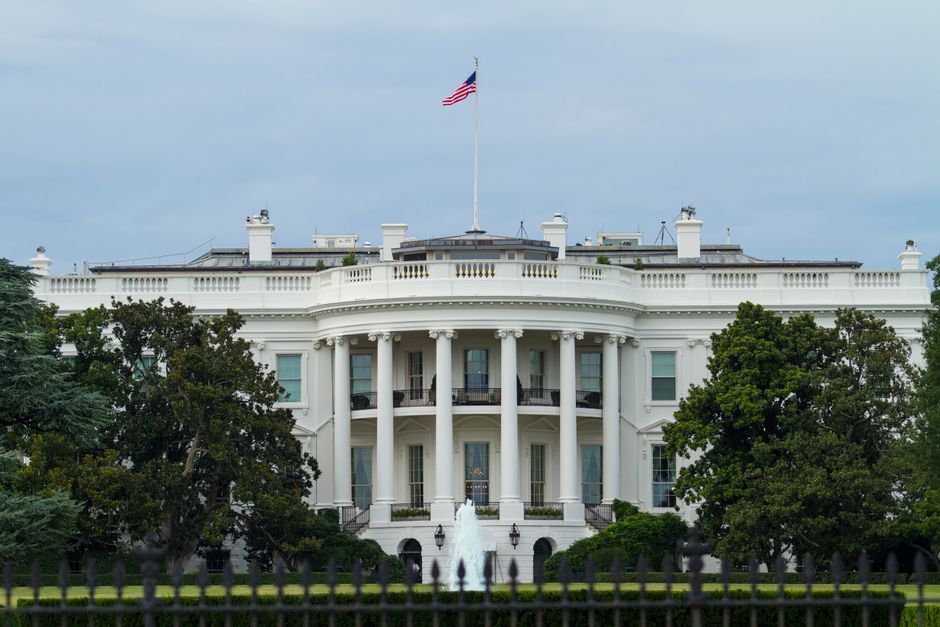
The Verge has reported on a striking information asymmetry in the opening days of the conflict with Iran, observing that while official White House social media accounts were posting gaming memes and AI-generated novelty content, Iranian state media was saturating platforms with ground-level footage of explosions over Tehran and smoke rising across the city skyline.
The contrast is jarring, but it did not emerge from nowhere. It reflects a decade-long evolution in how authoritarian governments have learned to use Western social media infrastructure against the communication strategies of Western governments themselves. Iran's state media apparatus, including outlets that operate under significant international sanctions and platform restrictions, has spent years developing rapid-response video workflows precisely because conventional diplomatic and press channels are largely closed to them. Necessity, in this case, produced capability. When the only megaphone available is raw visual content posted at speed, you get very good at posting raw visual content at speed.
The White House's approach, by contrast, appears to have defaulted to the register that its social media operation has cultivated in recent years, one oriented around domestic political performance rather than international information warfare. The Call of Duty aesthetic and AI-generated imagery were presumably intended to project strength and confidence to a domestic audience already disposed to support military action. That calculus is not irrational on its own terms. The problem is that information does not stay inside its intended audience. Content designed to land as swagger with one demographic reads as callousness or absurdity to another, and in a live conflict environment, the international audience is watching simultaneously and drawing its own conclusions.
This is a tension that governments across the democratic world have struggled to resolve since social media collapsed the distinction between domestic political communication and international public diplomacy. The two audiences want different things and respond to different signals. Historically, the State Department and the Pentagon maintained separate, carefully managed public affairs operations oriented toward international perception. The consolidation of government communication into a single social media voice, or at least a voice with a coherent political brand, has made that segmentation much harder to sustain.
Iranian state media has no such internal conflict to manage. Its international and domestic audiences are, to a significant degree, expected to receive the same message, which is essentially: this is happening, it is real, and we are showing you. That message, delivered through continuous footage of a capital city under bombardment, carries an emotional and evidentiary weight that is difficult to counter with meme formats borrowed from gaming culture. The likely reading is that whoever controls the White House's social media presence either did not anticipate how the content would circulate internationally or made a deliberate calculation that domestic resonance was more important. Either explanation carries its own set of problems.
There is also a deeper structural issue at work. AI-generated imagery and repurposed entertainment aesthetics are, almost by definition, unverifiable as documentation of anything real. Iranian state media footage, whatever its editorial framing, at least presents itself as evidence. In an environment where audiences are already primed to distrust official sources, the side that appears to be showing rather than performing holds a significant perceptual advantage, even if what it is showing is itself carefully curated. The Verge's framing of Iran having "out-shitposted" the White House is deliberately irreverent, but the underlying observation is serious. In the attention economy of a live conflict, the volume and apparent authenticity of visual output matters enormously in shaping initial international perception.
The consequences of this gap are likely to be most acutely felt in the court of allied and nonaligned international opinion. Governments and publics in Europe, the Middle East, and Asia that are not ideologically committed to either side will form early impressions partly from what they see circulating on social media. A White House that appears to be playing while a city burns loses the narrative before any official spokesperson has issued a single statement. That reputational cost is difficult to recover from, because corrections and context always travel more slowly than the original image.
What to watch for next is whether the administration recalibrates its communication posture as the conflict develops. Early-stage messaging in military operations often reflects pre-planned information strategies that were designed for a different tempo or a different level of international scrutiny. If the gap in ground-level visual coverage persists, it will likely prompt pressure from within the diplomatic and national security establishment to shift toward more conventional crisis communication. It is also worth watching how platforms respond to the asymmetry, since Iranian state media operates under content restrictions on several major services, and any enforcement decisions made in a live conflict environment will themselves become part of the story.


