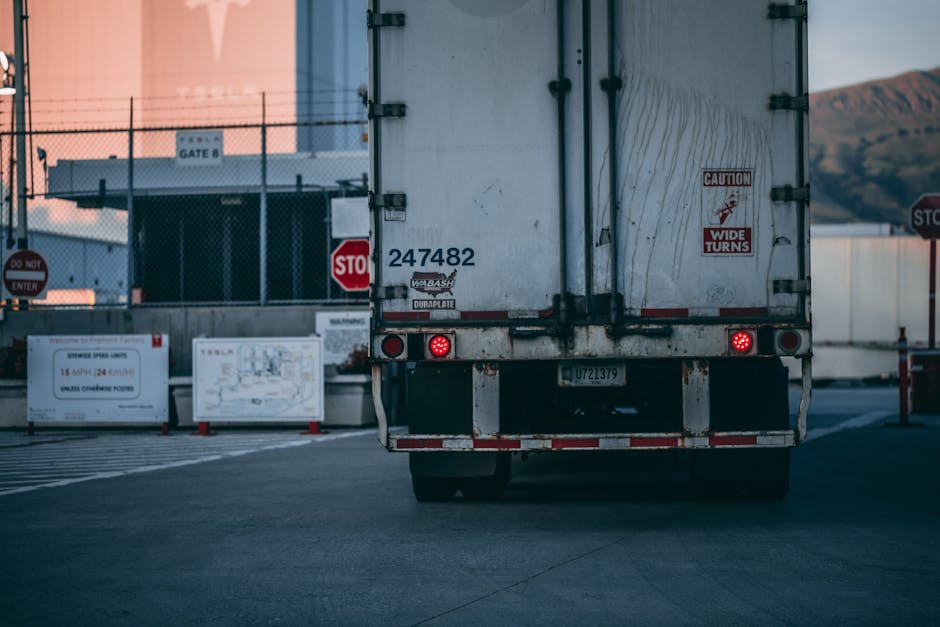
Tesla's long-delayed Semi truck has entered what the company is calling volume production as of April 2026, nearly a decade after the vehicle was first unveiled in concept form in 2017. The Verge reports that Tesla held an event Thursday evening to present the Semi to customers, the latest in a string of unveilings, demonstrations, and promises that have accumulated around the vehicle over the years.
To understand why this moment carries weight, it helps to remember how many times the Semi's story has been told and then deferred. When Elon Musk introduced the truck in late 2017, it landed with considerable force. The promise was a battery-electric Class 8 semi-truck — the kind that moves the overwhelming majority of freight across North America — with a range that would challenge assumptions about what electric drivetrains could do at scale. Early reservation holders included major logistics players and large consumer goods companies, suggesting real commercial appetite existed from the beginning. What followed was a prolonged lesson in the gap between Tesla's announcement calendar and its production reality.
The Semi joined a list of Tesla products that spent years in what the company's critics came to call "production hell." The Model 3 was the most famous case, but the Semi's delay was of a different character. It was not simply a matter of manufacturing complexity, though that was real. The truck required battery cells at a scale and energy density that Tesla's supply chain was not yet ready to deliver when the vehicle was first promised. The company's development of its 4680 cylindrical cell, which was positioned as a key enabler for both the Cybertruck and the Semi, itself ran years behind schedule. Each slip in the battery roadmap translated directly into a slip for the Semi.
There is also the matter of what the market looked like in 2017 versus what it looks like now. When Tesla unveiled the Semi, electric trucks were largely a theoretical proposition. In the years since, the competitive landscape has grown considerably more complicated. Daimler Truck, Volvo, Kenworth, and others have moved electric Class 8 vehicles into commercial service. Nikola, which at one point attracted enormous investor enthusiasm as a rival to Tesla in the electric truck space, collapsed into bankruptcy. The space Tesla once had largely to itself has evolved into a genuine, if still nascent, industry segment. Arriving in volume production in 2026 means Tesla is entering a market that has had time to begin forming opinions about what electric heavy trucking actually looks like in practice.
For fleet operators, the likely reading of this development is cautiously optimistic but measured. The companies that placed early reservations have been waiting long enough that some will have made interim decisions — purchasing diesel equipment, trialing competitors' electric offerings, or simply adjusting their electrification timelines. Volume production arriving now does not automatically reconvert that lost patience into orders. Tesla will need to demonstrate not just that it can build the trucks, but that it can support them with charging infrastructure adequate for commercial freight operations, where downtime is a direct cost. The company's Megacharger network, designed specifically for the Semi, will be scrutinized heavily by logistics operators who need predictability above almost everything else.
For Tesla itself, the Semi represents something beyond a single product line. The company has staked a significant portion of its credibility on the argument that it can execute across vehicle categories, not just passenger cars. After a period in which Musk's public profile became a significant distraction from Tesla's commercial story, a successful Semi launch would offer a concrete operational narrative to point to. Conversely, if volume production proves to mean small volumes that ramp slowly, the familiar pattern of announcement outpacing delivery will resurface as a reputational liability.
The broader electric vehicle industry is watching for a different reason. Class 8 trucking is one of the harder decarbonization problems in surface transportation, and a credible, scalable electric solution from any manufacturer carries implications for freight emissions policy, grid infrastructure planning, and the investment calculus of the companies that move goods across continents. If Tesla can demonstrate that the Semi works reliably at commercial scale, it provides a proof point that the entire sector benefits from.
What to watch in the coming months is fairly clear. The rate at which deliveries actually accumulate will be the first test of whether "volume production" means what it sounds like. Customer feedback from early fleet operators — on range in real-world loaded conditions, on charging reliability, on service and support — will matter more than any event Tesla stages for its own cameras. And the question of how many of those original reservation holders are still in line, versus how many have moved on, will offer a quiet verdict on what a decade of waiting costs in commercial relationships.