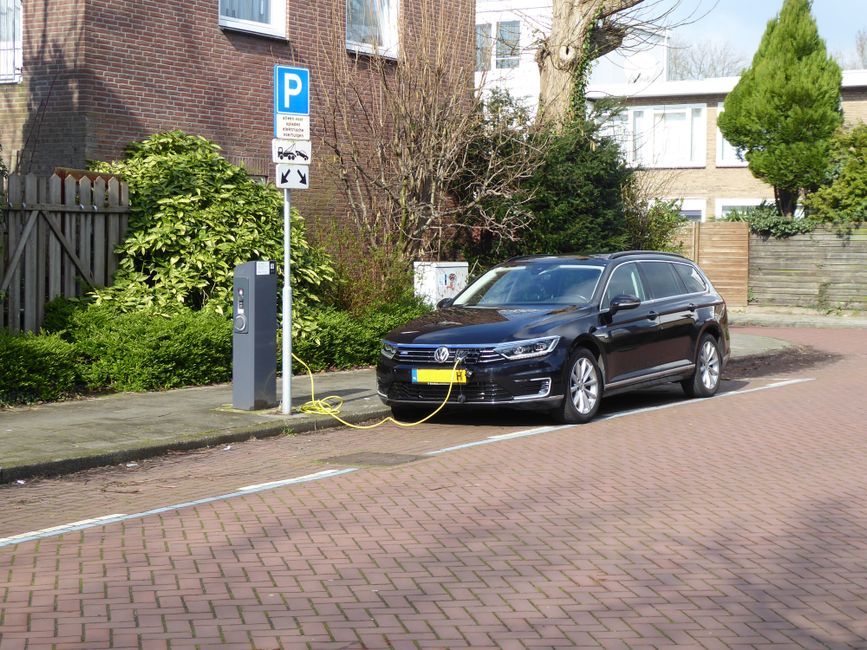
General Motors used an event in San Francisco to announce a cluster of initiatives centered on EV batteries, energy storage, and grid resilience, with a specific eye toward the surging electricity demand driven by artificial intelligence infrastructure. The Verge reported the announcements, which include the activation of vehicle-to-grid capabilities for current GM electric vehicles.
To understand why this matters, it helps to step back and consider the collision course that has been building between two of the most capital-intensive transitions in recent industrial history. The electrification of transport and the explosive growth of AI data centers are both drawing from the same finite resource: grid capacity. Data centers running large language models and training new AI systems require enormous and largely continuous power loads. Grid operators across the United States have been sounding alarms for several years about the pace at which new demand is outstripping the buildout of generation and transmission infrastructure. Against that backdrop, any technology that can smooth demand curves or inject stored energy back into the grid at peak moments represents genuine strategic value, not merely a novelty feature.
Vehicle-to-grid technology, commonly abbreviated as V2G, is the concept that an electric vehicle's battery pack does not have to be a one-way sink for electricity. When a car sits idle in a driveway or parking structure — which is the overwhelming majority of its life — that battery could theoretically act as a distributed storage node, absorbing cheap off-peak power and returning it to the grid when demand spikes. The idea has circulated in energy and automotive policy circles for well over a decade. What has historically kept it from scaling is a tangle of obstacles: the absence of compatible hardware in most vehicles, utility reluctance to build out the necessary bidirectional infrastructure, questions about battery degradation from additional charge cycles, and the sheer coordination problem of aggregating thousands of individual vehicles into something a grid operator can actually use.
GM's announcement is notable partly because it signals that the company believes enough of those obstacles have been cleared, or are close enough to being cleared, to begin activating the capability in existing vehicles rather than holding it for a future generation of hardware. That is a meaningful distinction. Retrofitting or unlocking software capabilities in cars already in consumers' hands is a faster path to scale than waiting for new model rollouts.
The framing around AI data centers is also strategically significant. GM is not primarily an energy company, and connecting its V2G ambitions to one of the most visible infrastructure anxieties of the moment — the power hunger of AI — is a way of positioning the company as a solutions provider in a conversation dominated by utilities, technology giants, and federal regulators. Whether that framing reflects a deep operational partnership with data center operators or is largely a reputational play is not yet clear from what The Verge reported, but the likely reading is that GM is signaling openness to exactly those kinds of partnerships.
The consequences ripple in several directions. For EV owners, V2G activation could eventually translate into a new income stream, with utilities or aggregators compensating them for the energy their cars contribute during peak demand periods. That would shift the economic calculus of EV ownership in a meaningful way and could accelerate adoption among buyers who remain on the fence about the upfront cost premium. For utilities, a successfully scaled V2G fleet represents a form of distributed storage that requires no new land, no new permits, and no new generation assets — an appealing prospect given how difficult it has become to site and build large infrastructure projects quickly. For grid operators worried specifically about the data center load curve, a fleet of bidirectional vehicles represents a buffer that can respond within seconds or minutes, faster than most conventional peaking generation.
The risks are real as well. Battery degradation from V2G cycling remains a legitimate concern, and the liability and warranty questions have not been universally resolved across the industry. Utility interconnection standards vary by jurisdiction, which means that even if GM's vehicles can technically send power back, the local grid may not be equipped to receive it. Consumer participation at the scale needed to make V2G meaningful as a grid resource is far from guaranteed; it requires behavioral change, compatible home charging equipment, and a financial incentive structure that utilities have been slow to standardize.
What to watch next is straightforward in outline if uncertain in timing. The critical signals will be whether major utilities begin formally contracting with GM or its partners to use this capacity, whether other automakers accelerate their own V2G timelines in response, and whether federal or state regulators move to standardize the interconnection and compensation frameworks that would allow V2G to function as a genuine grid resource rather than a demonstration project. GM has placed a visible bet. The question is whether the surrounding infrastructure catches up fast enough to make it pay off.


