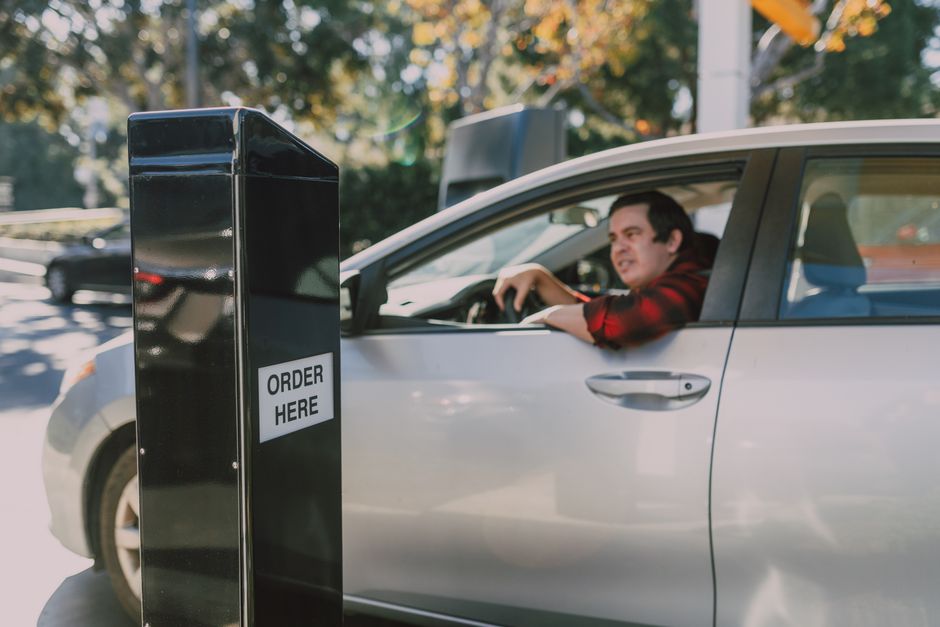
McDonald's experiment with AI-powered drive-thru ordering has moved well past the pilot phase and into something with longer legs, according to reporting from The Verge. The outlet frames the fast-food chain's chatbot deployment not as a novelty but as an early signal of a much broader shift in how automated voice systems are being woven into the physical retail experience.
To understand why this matters, it helps to go back to what the restaurant industry was actually trying to solve before AI entered the picture. Drive-thru operations have always been a bottleneck problem. Speed of service is the primary competitive metric, and a few seconds shaved off each transaction compounds into significant revenue gains at scale. The industry spent decades throwing human labor and process engineering at this problem, with diminishing returns. When voice recognition technology matured enough to handle the chaotic acoustic environment of a drive-thru lane — engine noise, wind, regional accents, distracted customers — it started to look like a genuine solution rather than a gimmick.
McDonald's is the obvious place to watch this play out, simply because of its size. The chain operates tens of thousands of locations worldwide, which means any technology it deploys at meaningful scale becomes, almost by definition, an industry-wide referendum on whether the approach works. What McDonald's does, its competitors study intensely. Burger King, Wendy's, Taco Bell and others have all been running their own AI ordering experiments, and the fast-food sector as a whole has become one of the more interesting live laboratories for conversational AI outside of the technology industry itself.
The Verge's framing — that drive-thru chatbots are just the beginning — points to something the headline number of installed units tends to obscure. The more consequential development is not that a machine can take a burger order. It is that the underlying infrastructure for deploying AI at the physical point of sale is being built out and stress-tested in one of the most demanding consumer environments imaginable. Drive-thru customers are impatient, often distracted, and not especially forgiving of errors. If the technology can perform reliably there, the likely reading is that it can perform almost anywhere a voice interface meets a transactional moment.
That framing also suggests the real prize is not labor cost reduction, though that is plainly part of the calculation. The deeper value is data. An AI ordering system that logs every transaction, every modification, every moment of friction or abandonment, generates an extraordinary stream of behavioral information. Over time, that data can inform menu design, staffing patterns, promotional timing, and eventually the kind of personalized upselling that human cashiers have always been theoretically capable of but rarely deliver consistently. The drive-thru lane, recast as a data collection surface, becomes a strategic asset in a way it never was before.
The consequences of this shift are not evenly distributed. For restaurant workers, the trajectory is uncomfortable to map out plainly. Drive-thru order-taking has historically been an entry-level position, one of the first rungs on the employment ladder for young or low-wage workers. The automation of that function does not immediately eliminate jobs in most cases — systems still need human oversight, and kitchens still need staff — but it applies pressure over time. As the technology matures and error rates drop, the business case for maintaining a human order-taker weakens. This is a pattern the technology industry has visited on other sectors repeatedly, and there is little structural reason to expect food service will be different.
For technology vendors and AI platform companies, the restaurant sector represents something valuable: a high-volume, high-visibility proving ground that generates credibility. A company that can demonstrate reliable performance across thousands of drive-thru lanes has a powerful reference case for pitching AI voice systems into retail, healthcare check-in, hospitality, and other industries with similar transactional profiles.
For consumers, the near-term experience is likely to remain uneven. Early adopters of this technology have posted enough viral complaints about misheard orders and bizarre substitutions to establish that the systems are not yet seamless. But consumer tolerance for AI interfaces tends to rise as familiarity increases, and companies will be motivated to smooth the roughest edges quickly.
What to watch in the coming months is whether the industry's experimentation phase begins to consolidate. Pilot programs are relatively cheap commitments; system-wide rollouts require genuine confidence in both the technology and the regulatory environment around automated labor. Any meaningful moves by major chains to expand deployments from regional tests to national standards will be a signal that the technology has crossed a threshold. Equally worth watching is whether labor advocates or municipal governments begin pushing back through wage and employment policy, which could reshape the economics of the automation case faster than the technology itself.