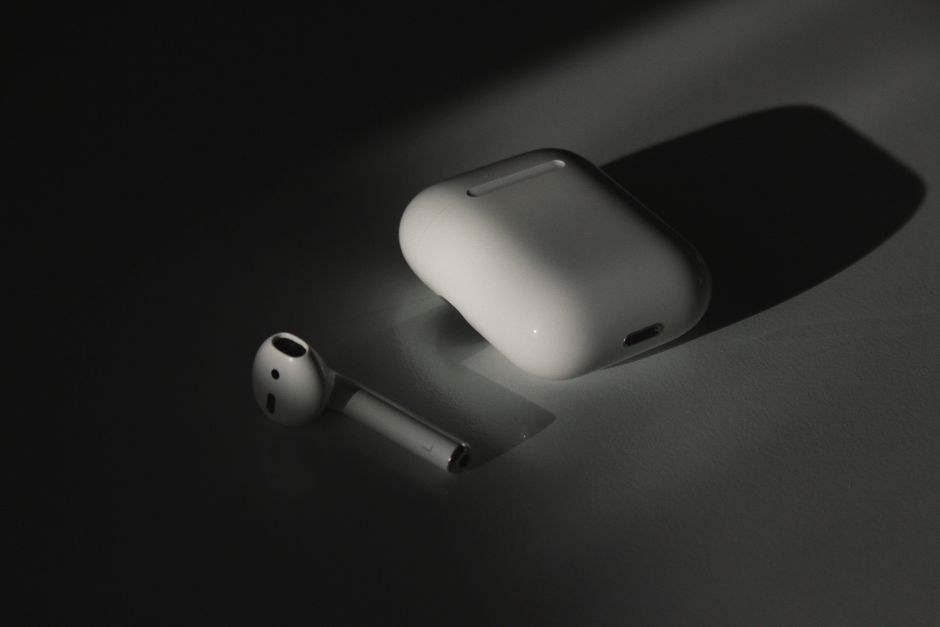
Apple is preparing some of its most unconventional hardware in years, according to reporting from The Verge, which has highlighted new details from Bloomberg's Mark Gurman about the company's product pipeline stretching into 2027. Among the items Gurman says are currently on schedule: a second-generation folding iPhone and, perhaps more strikingly, a version of AirPods equipped with cameras intended to serve artificial intelligence functions.
To understand why camera-equipped earbuds represent a meaningful inflection point rather than a novelty, it helps to think about what Apple has been quietly building toward. The company has spent the better part of two years reorienting its entire software platform around AI, and the gap that keeps surfacing in that effort is one of perception — the ability of a device to understand the physical world around the person using it. Siri, even in its upgraded forms, operates largely on what a user tells it. A camera embedded in a wearable that sits on or near a person's ears all day is a fundamentally different proposition. It would give Apple's AI layer eyes, passively or on demand, in a form factor people already wear for hours at a stretch.
This is not an entirely new idea in the industry. Meta has pursued exactly this logic with its Ray-Ban smart glasses, which carry cameras and a microphone array and have been integrated with Meta AI. The early reception to those glasses has been strong enough that Meta has reportedly accelerated its roadmap in the category. Apple, characteristically, has been slower and more deliberate, but the camera AirPods, if Gurman's reporting holds, suggest the company has concluded that the wearable AI race is real and that it cannot cede the form-factor entirely to competitors while waiting for its own AR glasses to materialize.
The second folding iPhone deserves its own framing. Apple entering the foldable market at all was significant; a second-generation device arriving within a relatively compressed window would signal that the company views the category as central rather than experimental. The history of Apple's product lines suggests the company uses first-generation hardware to establish the platform and second-generation hardware to make the engineering case for mass adoption — tighter manufacturing tolerances, better display durability, improved battery life, lower entry price. Samsung and others have had years of iteration in foldables, and Apple's second attempt is likely the moment it tries to close that experience gap rather than simply prove the concept.
The consequences of all this ripple outward in several directions. For consumers, the most immediate implication is that the Apple ecosystem is about to demand a fresh look at what a device actually is. AirPods have been audio accessories. If the 2027 version carries a camera and participates actively in AI inference, they become something closer to a sensing platform that happens to play music. That will raise legitimate questions about privacy — who can see what the earbuds see, how footage or image data is stored, whether bystanders will have any meaningful awareness that a camera is present. Apple has staked enormous brand equity on privacy as a differentiator, and it will need to demonstrate that the same discipline it applies to on-device processing applies equally to any visual data these devices might collect.
For the broader wearables industry, the likely reading is that camera integration in audio devices is about to become a competitive baseline rather than an edge feature. If Apple ships it in AirPods, every major audio brand will face pressure to respond, and the component ecosystem — miniature lenses, low-power image processors, the wireless stacks needed to pipe visual context to an AI model — will mature quickly as a result.
For Apple's AI ambitions specifically, the hardware roadmap Gurman describes represents a bet that spatial and contextual awareness, not just language understanding, is where the next competitive moat gets built. Google has its own multimodal AI work. Meta has its glasses. Microsoft has enterprise-focused tools. Apple's answer, this suggests, is to distribute AI perception across devices people already own and wear, rather than introducing a single new product category that requires behavioral change.
The things worth watching in the months ahead are numerous. Whether the camera AirPods surface in regulatory filings or supply chain leaks will give some indication of how firm that 2027 timeline actually is. Apple's privacy frameworks and how it chooses to explain camera data handling will matter enormously for public reception. And the second folding iPhone's pricing will be a signal about whether Apple sees foldables as a premium niche or a genuine volume category. If Gurman's reporting continues to develop, the picture of Apple's mid-decade hardware strategy will come into clearer focus, and it looks considerably more ambitious than the company's recent product years might suggest.


