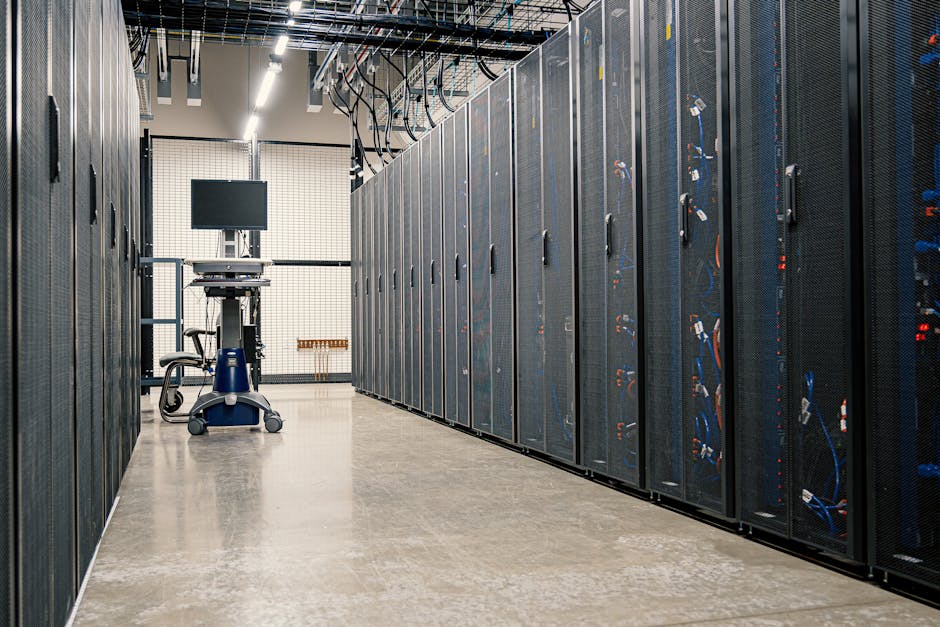
A new poll from the New York Times and Siena University, reported by The Verge, finds that public opposition to artificial intelligence infrastructure has hardened into a clear majority position. Sixty-one percent of respondents said they oppose the construction of data centers to power AI technology, a figure that cuts across the usual demographic and partisan lines that tend to soften findings like this one.
The result is striking but not surprising to anyone who has been paying attention to local politics across the United States over the past two years. What the technology industry spent most of the last decade treating as a largely invisible backend problem — where to put the servers, how to cool them, where to source the power — has become intensely visible and intensely contested. Data centers were once the kind of infrastructure that got approved quietly, welcomed for the tax revenue and the ribbon-cutting photo, and then largely forgotten. That era appears to be over.
Several forces converged to produce this shift. First, the scale of what is now being built is genuinely different from what came before. The generative AI boom that accelerated after the release of large public-facing language models required a step change in computing capacity, and that capacity has to live somewhere. The data centers being proposed and built now are not the modest facilities of a decade ago. They are enormous consumers of land, water for cooling, and above all electricity — electricity that has to be generated, transmitted, and in many cases newly built. Communities that might once have accepted a modest server campus found themselves confronted with projects that strain local grids, draw down aquifers, and in some cases require the construction of new fossil fuel generation to meet demand, undercutting renewable energy commitments those same communities had made.
Second, the benefits of this infrastructure are largely invisible to the people living near it. A semiconductor plant or an EV battery factory at least carries the tangible promise of local employment. Data centers are famously light on permanent jobs relative to their physical footprint and the subsidies they often extract from state and local governments. The gap between what a community gives up — in grid capacity, in water, in land — and what it receives in return has become a genuine political grievance, not just an activist talking point.
Third, and perhaps most important for understanding the poll numbers, AI itself has become a source of anxiety for a broad cross-section of the public. Concerns about job displacement, about the reliability and honesty of AI-generated content, about the concentration of power in a handful of technology companies — these anxieties are well-documented and widely distributed. Opposition to data centers has become a vessel for that broader unease. When a respondent says they oppose data center construction, the likely reading is that they are not making a narrow land-use judgment. They are registering a more general skepticism about who controls this technology, who benefits from it, and whether anyone is adequately watching over its development.
The consequences of sustained, majority-level opposition of this kind are likely to be felt in several places at once. For the technology companies racing to build out AI capacity — and the hyperscalers in particular have announced capital expenditure plans running into the hundreds of billions of dollars — permitting and community relations will become more expensive and time-consuming. Projects that might once have sailed through local approval processes will face organized opposition, legal challenges, and politicians newly alert to which way the wind is blowing. The Verge notes that politicians are already responding to these signals, which suggests the regulatory environment around data center siting is likely to tighten rather than loosen in the near term.
For the AI industry more broadly, the poll represents a longer-term reputational problem that cannot be solved by better lobbying alone. The gap between how the technology is discussed inside the industry — as a transformative tool that will cure diseases, democratize knowledge, and drive economic growth — and how it is perceived by the public has rarely looked wider. The industry has spent considerable effort on the positive case for AI and relatively little on engaging honestly with the physical costs of the infrastructure that makes it possible. That asymmetry is now showing up in polling.
What to watch next is whether opposition remains diffuse or begins to organize into something more durable. Ballot measures restricting data center construction, state legislation imposing moratoriums or new environmental review requirements, and federal attention to the grid implications of AI infrastructure are all possibilities that become more plausible as opposition numbers this large become public and politicians internalize them. The technology industry has navigated hostile public opinion before, but it has rarely done so while simultaneously asking communities to host facilities of this scale and asking utility regulators to prioritize its power needs. Both of those requests just got considerably harder to grant.